on typewriters, hope, and giving things up.
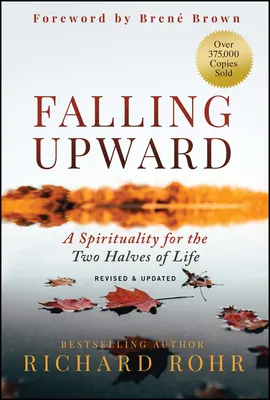
I've been reading Richard Rohr's Falling Upward, a book one of my therapists recommended to me during an intensive outpatient therapy program. The basic premise, or at least the part that has stuck with me most, is that the first half of life is about building the container, while the second half is about discovering what the container was actually meant to hold.
The book has been really good for me, although I suspect I'm coming to some of its lessons by a different route than Rohr.
I spent a lot of the first twenty-plus years of my adulthood drinking whisky heavily. Alcohol robbed me of opportunities, relationships, time, and all kinds of good things I might have had if I hadn't been drinking. Alongside that were years, decades, of mental health problems that I didn't understand particularly well, and an awful lot of up-and-down ping-ponging that made sustained effort difficult. That is to say, while I was supposed to be building the container, I wasn't doing a particularly good job of it.
So I'm doing a lot of that work later than most people.
After my second (most recent) stint in rehab, and after finally getting some clarity about my mental health and beginning to treat it properly, I discovered that I had more mental, emotional, and spiritual space than I'd had in a very long time. Some of the things I learned in treatment, and some of what I'm learning now through Rohr, and my therapist, and my meditation and journaling, have been genuinely transformative.
It isn't incidental that The Typewriter Mechanic really began in earnest after treatment. I'd bought and sold typewriters before. I'd tinkered with them quite a bit. I'd been interested in them. But I didn't have the clarity or peace of mind to build something around that interest until some other things had been removed from my life.
And so I've been thinking a lot about containers.
A typewriter is a container. Mechanically, within the machine exists an arrangement of hundreds of levers and springs and linkages and gears, built to do the extraordinarily simple thing of putting one character after another onto a piece of paper. But that's only what the machine does. What it holds is something else entirely.
Typewriters can hold memory and nostalgia. They can hold love. They can hold regrets. They can hold the mundane and the profound. They can hold a word of poetry or a word of encouragement. They can unleash a bit of censure just as easily as they can offer a note of grace or mercy. They can hold a grocery list, the letter you weren't sure you should send, something you needed to say to another person, or something you needed to say only so that you could finally hear (and see) yourself saying it.
But the machine itself supplies none of those things. The thing a typewriter holds is whatever it's imbued with by the person sitting at the keyboard.
This is where Rohr's idea has started to become important to me. If I'm still building the container, I want to be considerably more intentional about its construction than I was the first time around. I want to build it on the basis of my values. And then, on the basis of those same values, I want to decide what gets put inside.
And if I had to choose the value or idea at the center of it, I think it would be hope.
Hope gets a bad reputation, but it's usually because we're misusing the word. Like, we say "I don't want to get my hopes up" as though hope itself is the dangerous thing. But what we usually mean is that we don't want the thing we're wishing for to not come through. We don't want to be disappointed. We don't want to discover that the destination we imagined isn't where we're going after all.
That's different from hope.
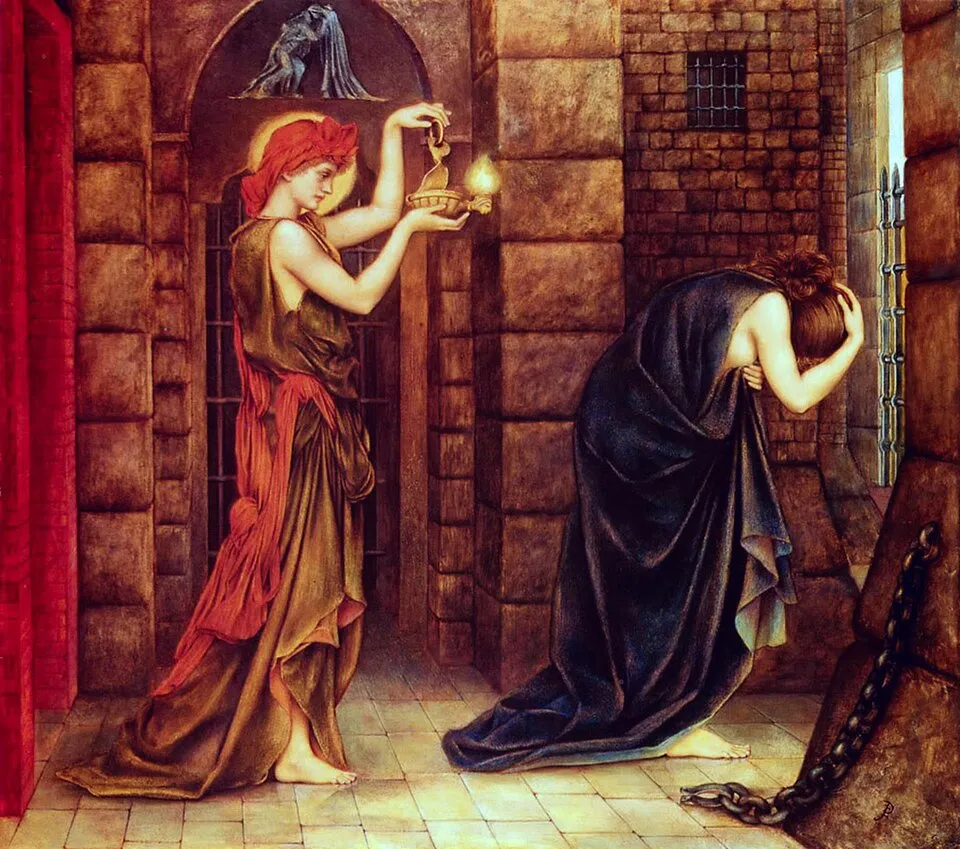
A passage in Christian Scripture says that hope does not disappoint. I've been thinking about that too. Because hope, as I understand it now, isn't a guarantee that the thing I want is going to happen. It isn't optimism, exactly; it certainly isn't pretending everything is going to be fine and okay.
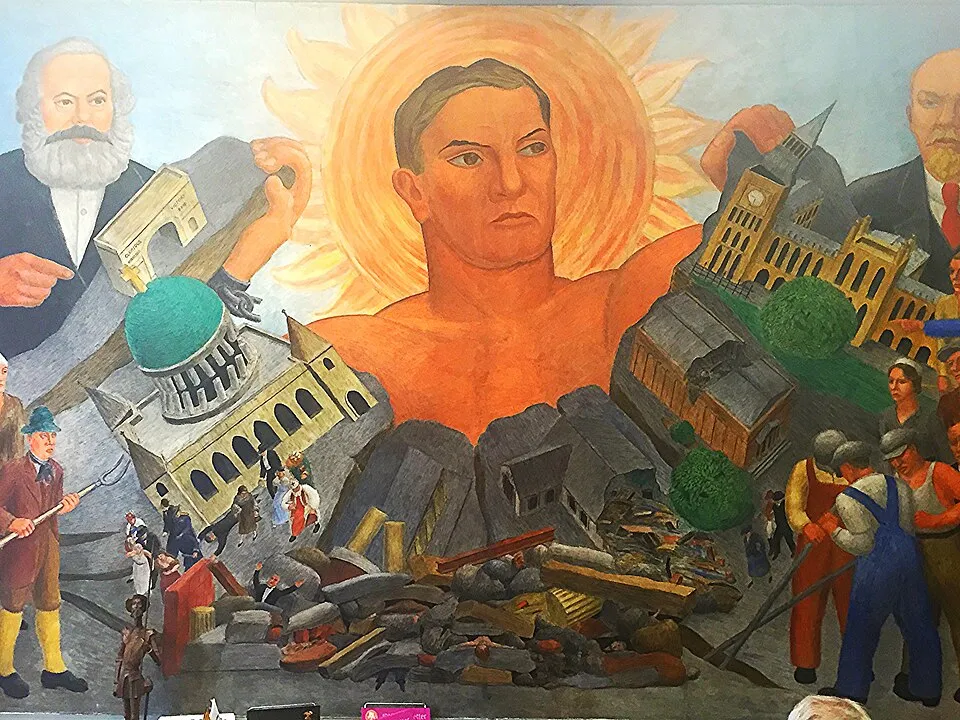
Hope is what makes it possible to understand a life as a journey rather than a series of destinations. And even more than that, I think hope is ultimately an act of resistance in the face of systems that offer us few answers and, as a result, mostly hopelessness.
That brings me back to typewriters. There is something wonderfully resistant about using one.
I don't mean that in the precious sense that typing a letter is going to bring down capitalism or that owning a Smith-Corona makes you Che Guevara. (I sell the damn things. I'm implicated too.)
But a typewriter is stubbornly a tool. It does something. It asks something of you. It doesn't need an account or a subscription. It doesn't care whether what you're writing can become content. It doesn't measure engagement. It doesn't congratulate you for maintaining a streak. It doesn't ask whether the sentence you just wrote could be repackaged into twelve touch-points.
You put paper into it and you make something. That matters to me.
Every typewriter I sell goes out with a brief note I've typed on that particular machine. On the most practical level, the note is evidence. It tells the buyer that I sat down at this machine, put paper into it, and used it. The thing works. But I think I've realized that the note means something else to me too. It's a small testament to what I believe the machine is for.
I find typewriters extraordinarily beautiful. I wouldn't be doing this if I didn't. I can happily stare at the shape of an Olivetti or the ridiculous amount of engineering that went into an old Olympia. But I'd be saddened to learn that a machine I worked hard to bring back into working condition spent the rest of its life sitting untouched on a shelf.
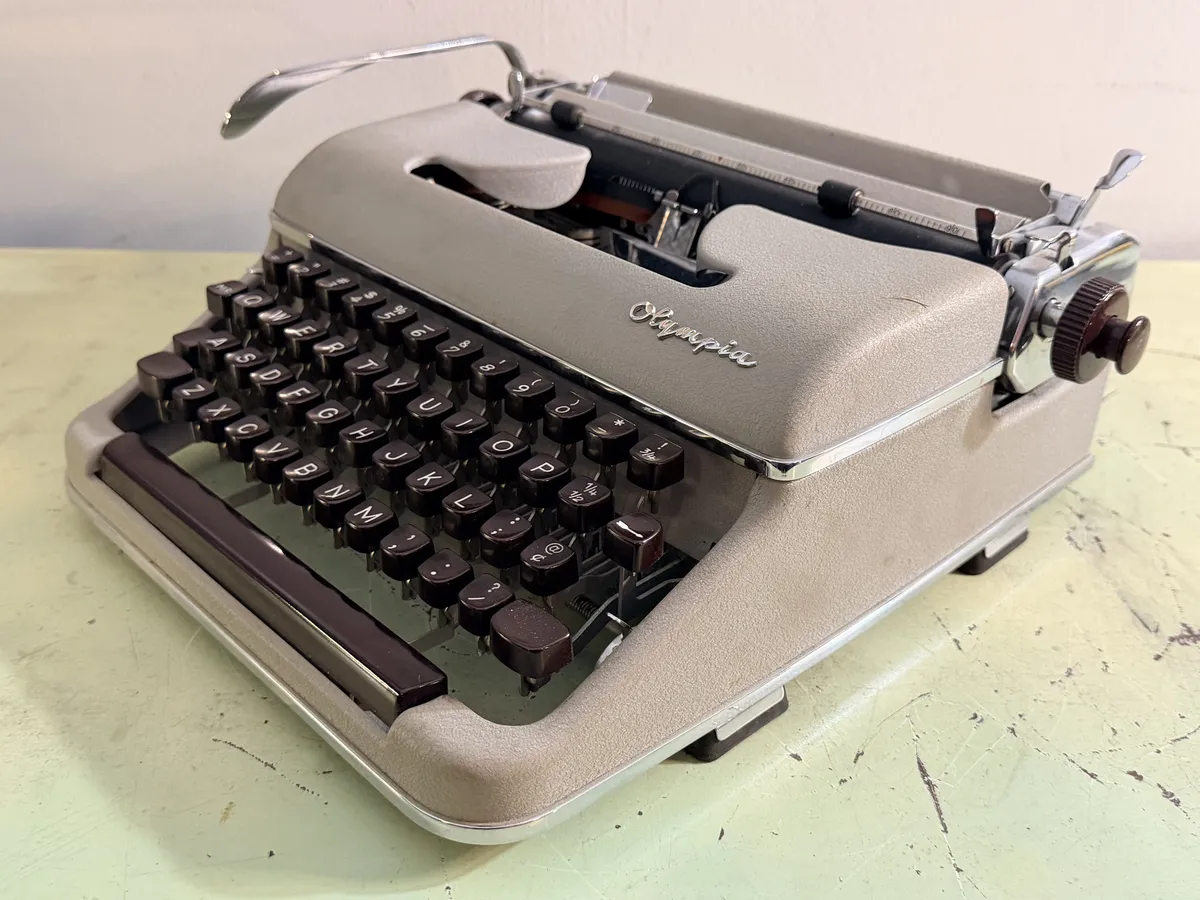
It isn't window dressing. Use the damn thing. Put something into it.
This is where another idea I've carried around for years starts rubbing up against Rohr's container.
The great journalist Malcolm Muggeridge once observed that one of the pleasures of growing older is giving things up. I love that, because building the container can't only mean deciding what to put into it. At some point, you also have to decide what doesn't belong there.
I've had to learn that in very tangible ways. Years ago I gave up smoking. I loved smoking a pipe. There are things about it I still miss. But the simple fact is that I couldn't moderate it. Eventually I had to make the same admission about alcohol, at considerably greater cost.
Giving those things up did not make my life smaller. It made room.
And I don't want to make that too abstract, because I think our culture is exceptionally good at turning "giving things up" into another form of personal optimization. Declutter your house. Simplify your morning. Buy twelve matching beige containers in which to organize the possessions you bought while trying to become the person the advertisements told you to be.
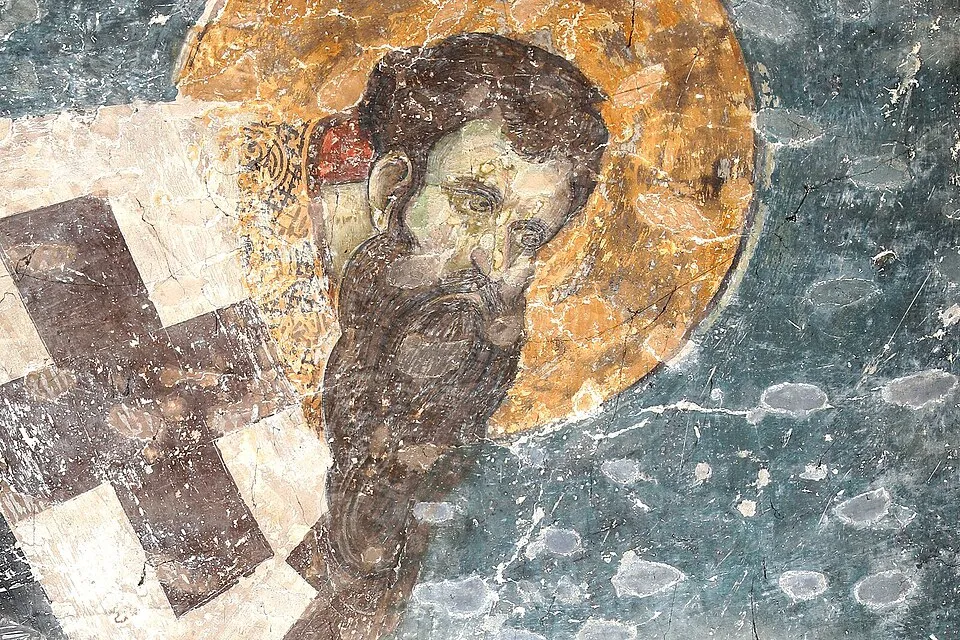
The Christian tradition has a rather more uncomfortable way of talking about possessions. St. Basil the Great said that the extra coat you own belongs to the poor. The food you've stored belongs to the hungry. That's a hell of a lot more demanding than cleaning out a closet. And I think he's right.
We live in a society that tells us to accumulate ever-increasing amounts of stuff. More money. More things. More achievements. More audience. More experiences. More evidence that we were here and that our being here mattered.
And if we aren't careful, we can spend our lives filling the container we worked so hard to build with things it was never meant to contain.
Maybe that's another reason I've become so attached to these old machines. A typewriter is finite. It has margins. It has a beginning and an end to every page. It can only hold the piece of paper you've put into it. Eventually you reach the bottom, pull that page out, and decide whether there's anything else worth saying.
There is something almost merciful about that.
I don't yet know where the line is between stewardship and accumulation. That's especially awkward to admit as somebody whose business currently involves having an awful lot of typewriters. I don't have a clever rule for how many possessions are too many, or how much ambition is enough, or when enjoying beautiful things becomes hoarding them.
I'm working that out for myself, and I suspect the answer is going to be different for everyone anyway. But I think I'm finally learning to ask the question.
What is this container for? What belongs inside it? What am I holding onto that needs to be given up? What have I been given that ought to be put to use?
Maybe the work of growing older isn't merely filling the container Rohr describes. Maybe it's learning to become discerning about what we allow into it, and increasingly willing to empty it of the things that don't belong.
I lost a lot of time. I can't get it back. But I have some say over what I do with the space that's here now.