tales from the bench no 2: when did everything become content?
At some point, everything became content.
Not writing, not art, not letters, not journals, not private attempts to understand our own lives. Content.
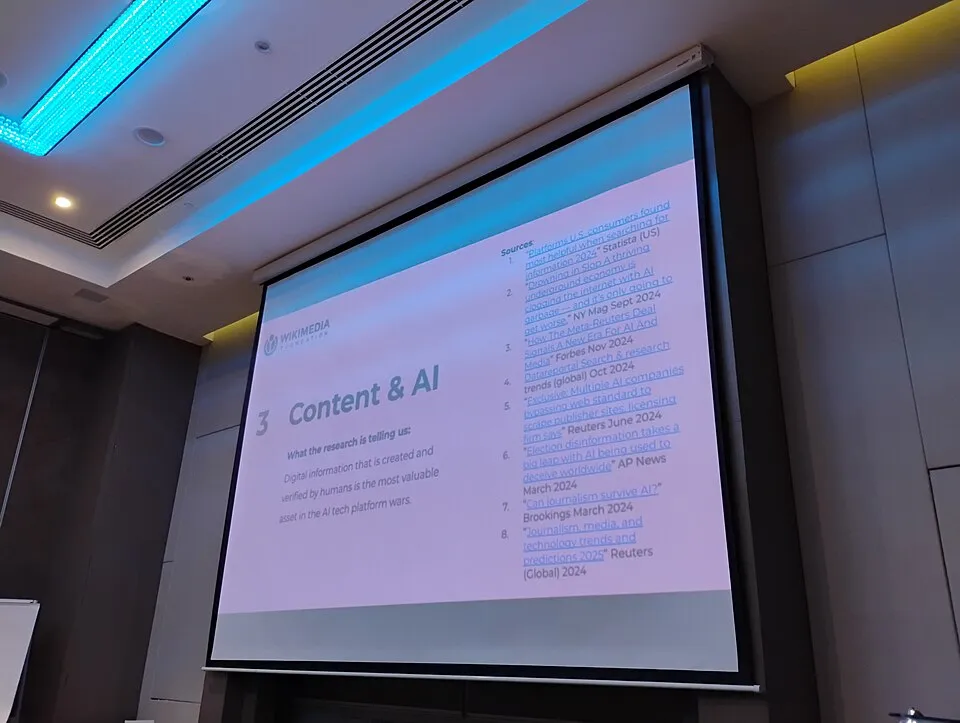
The word is ugly as it is efficient. It takes something human and turns it into inventory. A sentence becomes an asset, a memory a post, a wound a brand opportunity. It takes the raw material of being alive and asks how much value can be extracted from it. It asks, before anything else, who will consume this? Where will it live?
How will it perform?
I know this language because I spoke it for sixteen years. I worked in content marketing as a strategist, a manager, a development director. I wrote the calendars, built the plans, sat in the rooms where attention was treated as something to be warmed, nurtured, converted, reported on. So I'm not pretending to be innocent. I made a living inside the machine I'm criticizing.
And I also know what it costs. One of the crueler tricks of content culture is that it teaches us to take private work, the kind that helps us to stay alive, and asks us whether it can be made "useful" to someone else. Whether it can produce "value." Whether it can be sold. Whether some part of you that was never created for the market can nevertheless be dragged into it.
Something you wrote to heal becomes a book proposal. A tender practice becomes a deliverable. Something unfinished gets hauled into fluorescent light and asked to prove its worth.
Years ago, a medium-sized publisher came to me after reading a bunch of essays I'd had published in various online spaces. They asked for sample chapters to a book, literally whatever I wanted to submit. I curated some unfinished essays, worked up an outline and a proposal, and then I wrote several sample chapters slowly, carefully... the same way I'd been writing all along.
Then came the response. Too heavy. Not what they were looking for. Maybe we could reconnect in a couple of years.
That moment gutted me, not because the book didn't sell, but because I realized immediately what had happened. Something I'd done to survive, to essentially reflect the truth back to myself, got translated into market categories and found lacking.
My friends, that wasn't editing. It was translation into a currency I never asked for. The work had meant something to me before anyone offered to buy it. But once money entered the conversation, meaning suddenly wasn't enough. It also had to be marketable.
An advertising agency I worked for years gave me a different angle on the same problem. I remember a pitch where we rolled out a massive “content ecosystem.” (That was literally the phrase.) Every channel humming, every asset repurposed, until a single white paper became 12 touch-points.
The sales manager put the number on the final slide. Then we waited. The client stared at the red total, underlined for emphasis, for a full minute. That's not an exaggeration, and it was excruciating. What they had wanted was some help, some clarity… we’d given them a factory.
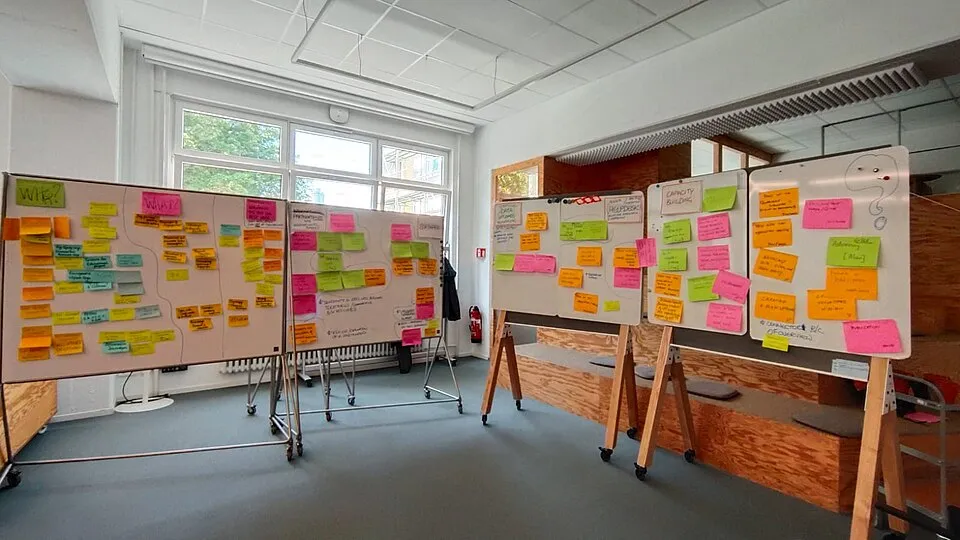
Growing more and more uncomfortable watching their silence, I realized how often we sell noise dressed up as strategy. How easily capitalism mistakes more for better, because more can be counted, packaged, billed, and sold.
Here's the critique in plain clothes.
Productivity is not an ethic, and an audience is not a sacrament.
Your ability to produce is not a measure of your virtue. Your ability to attract attention is not a measure of your worth. So if you make your worth dependent on being seen, you will start to perform your own life back to yourself.
That is exhausting. And it makes the actual work thinner.
I'm not arguing against sharing. I'm not arguing against publishing or selling something you made. Hell, I sell typewriters. Because I live under capitalism too, damn it. I have bills. I participate in markets. There is no contradiction in admitting that and still refusing the idea that the market gets to determine what matters. The problem is when selling becomes the essential proof that the thing mattered at all.
Some of the best work you'll ever do will be too heavy for the market, and that's okay. It's allowed to be heavy. It's allowed to be slow. It's allowed to be only for you. And perhaps most importantly... it is allowed to be economically useless.
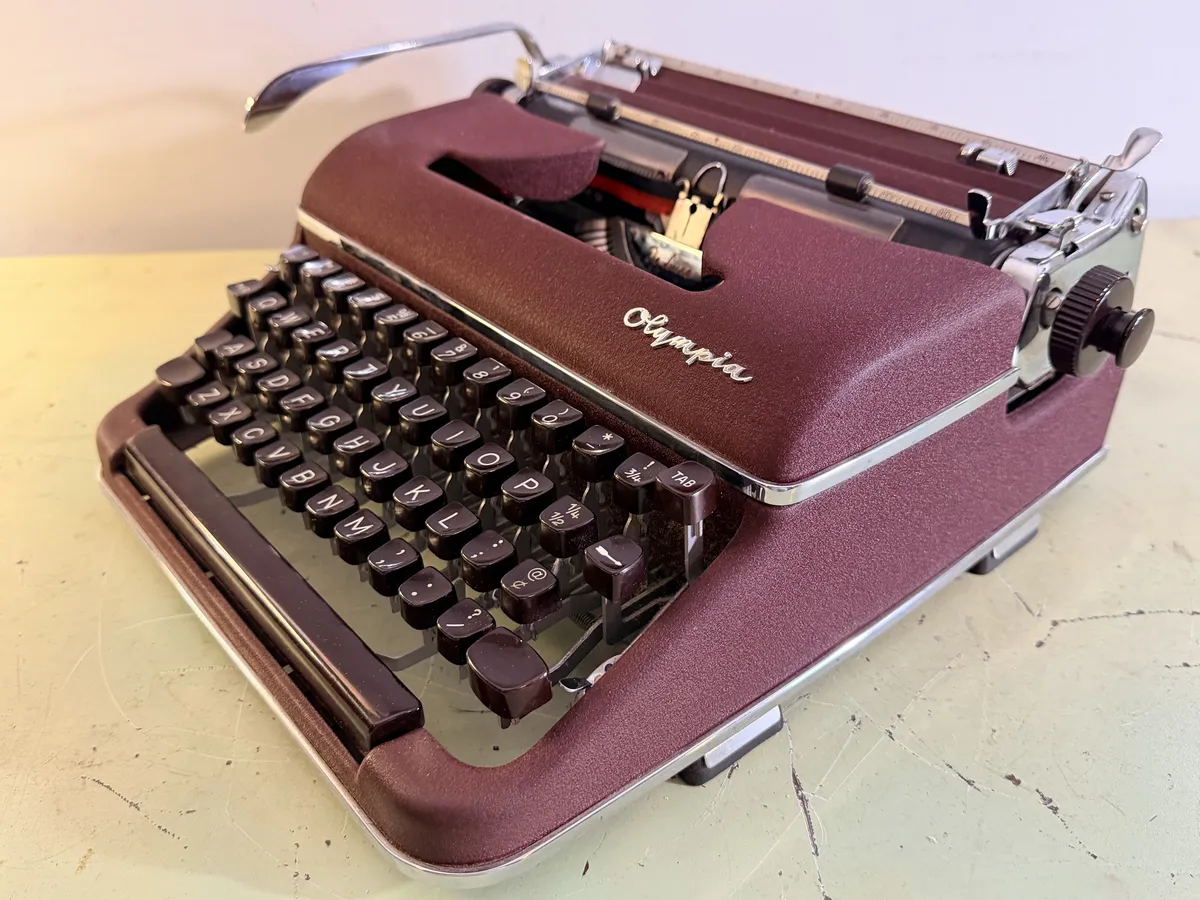
That's part of why I love machines that don't pretend to be platforms. A typewriter is slow on purpose. It makes you sit with the sentence. You can't even delete a mistake. There's no analytics dashboard wagging its bony finger at you, no pressure to optimize or engage some insatiable audience. It’s only the page and whatever truth you're willing to hammer out today.
That's not nostalgia. That's resistance. That’s a small refusal to treat your interior life as a feed. A refusal to let the logic of the marketplace colonize one more part of being human.
So here's the lesson, said plain, no soft landing. You don't need to be productive for your work to matter. You don't need an audience for it to be real. Make the thing. Let it be uneven, let it be private, let it be heavy. Some things are worth doing precisely because they don't scale.
We desperately need more things that don't scale.
Another way to say this is that we've confused creation with publishing. Creating is the part where you listen closely enough to hear yourself and, in a radical act, something new enters the universe through your will. Publishing is just… an optional step.
And look, sometimes publishing is generous, sometimes it's brave, and sometimes it's premature or unnecessary. The culture tells you to collapse the two, to treat the act as incomplete until it ships. That's a lie. Because a culture organized around production has a difficult time understanding an act that produces nothing it can use.
The performance pressure shows up in small ways. You start thinking in captions while you're still living the moment. You weigh whether a hobby could be monetized before you've even gotten any good at it. You ask whether your private processing is relatable, almost as if relatability were the point.
You stop asking, “Do I love this?” and start asking, “Could this become something?”
That question is a thief. It steals the quiet where insight actually grows.
And this is one of capitalism's more impressive tricks: eventually the boss doesn't even need to be in the room. We become our own managers. We monitor our own productivity. We commodify our own hobbies. We turn our personalities into brands and our private lives into inventories of potentially useful material.
We clock ourselves in.
None of this is an argument against audience as such. Readers are gifts, community is real, but gifts stop being gifts when you invoice yourself for them. The work doesn't get its dignity from being consumed. It gets its dignity from being honest. Sometimes that honesty will find others, sometimes it won't.
Either way, it did its first job. It told you the truth, in time to matter.
If I'm blunt here, it's because the softer phrasing lets the old loops keep running. As a recovering alcoholic, I don't want to perform my recovery. As a man full of belief and skepticism, I don't want to perform my faith or my doubts. As a human being, I don't want to perform my healing so it can count.
I just wanna do it.
I want parts of my life that aren't for sale.
And then maybe sometime later I'll share a piece of it. But that's downstream.
Upstream is the work itself, done without a camera on. Make the thing. Don't make a spectacle of yourself to justify it. Let it be ordinary and stubborn and human. Let it be useless to the market and useful to you.
That's not content. That's a life.