how to buy a vintage typewriter (the parts no one talks about); or, feeling over features.
How to Buy a Vintage Typewriter Online Without Getting Burned
Most of the advice about buying a vintage typewriter online is wrong. It usually begins with a list of models to buy, models to avoid, prices to expect, and features to look for. That's all useful enough, but it misses the more important point.
The biggest mistake people make isn't buying a broken typewriter. It's buying the wrong one.
A machine can arrive exactly as described, type beautifully, survive shipping without a scratch, and still spend the next twenty years gathering dust because it never felt quite right in your hands. Another might have a few honest quirks, some personality, ask a little patience of its owner… and it becomes the machine you reach for every evening simply because writing on it feels wonderful.
That's what you're really buying.
Not a collectible. Not a piece of décor. Not even a machine.
The money you spend on a typewriter should ensure for you a writing experience.
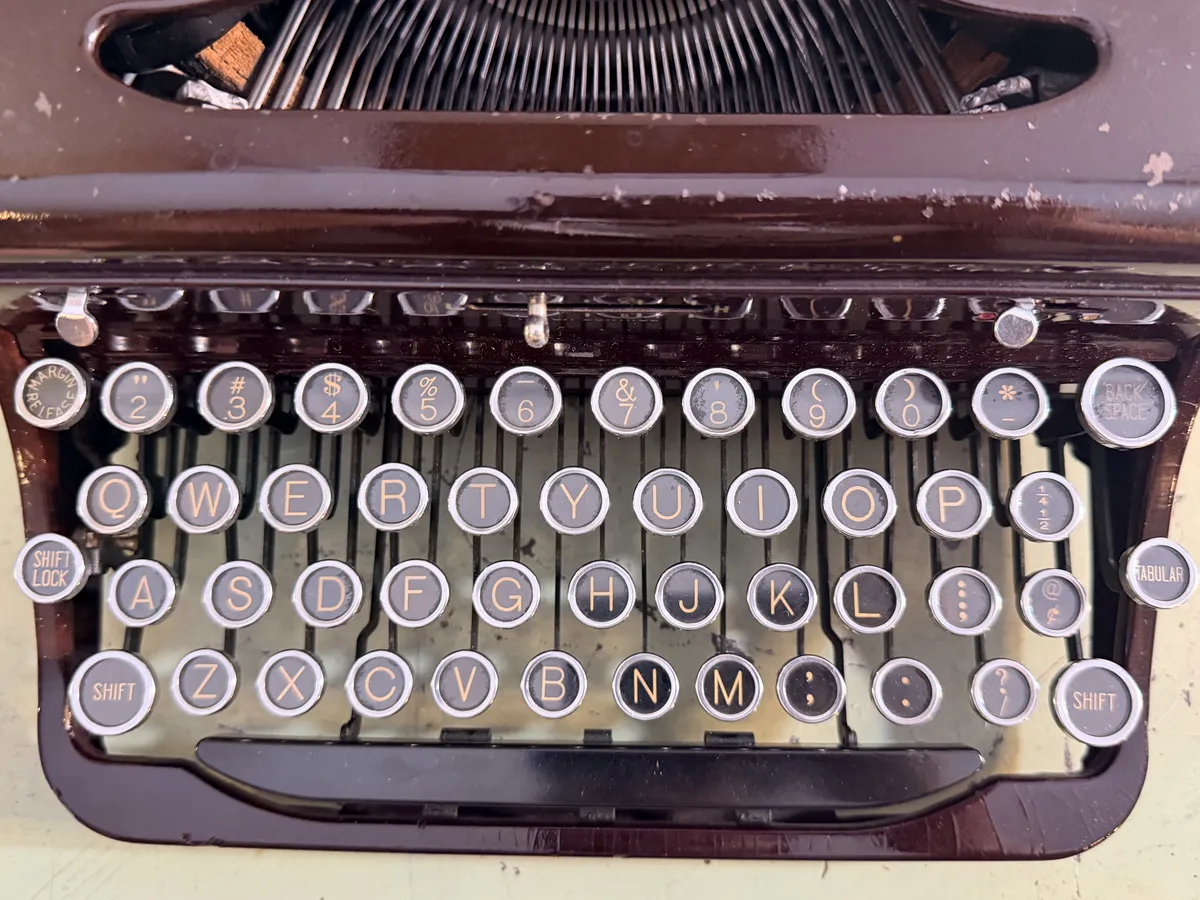
I've bought, repaired, sold, and shipped dozens of typewriters, more than I can comfortably justify. Along the way I've learned that there are two separate skills involved in buying well. The first is learning to recognize a good listing. The second (and I would argue the more important) is learning to recognize and know yourself.
Know What You're Looking For
Before you start comparing prices or watching auctions, spend a little time thinking about what you actually want writing to feel like.
This sounds almost absurd until you've spent an hour with two very different typewriters.
A Smith-Corona portable from the late mid-sixties often feels soft, cushioned, and ultimately very forgiving. Many Japanese-made portables have a lively, clattering rhythm that encourages speed, but it feels a bit like driving without shocks. Olympias and Adlers tend to feel crisp, punchy, and mechanically precise, as though every keypress was engineered by someone who distrusted unnecessary motion. Older Remingtons ask for a longer, more deliberate stroke that rewards rhythm over haste.
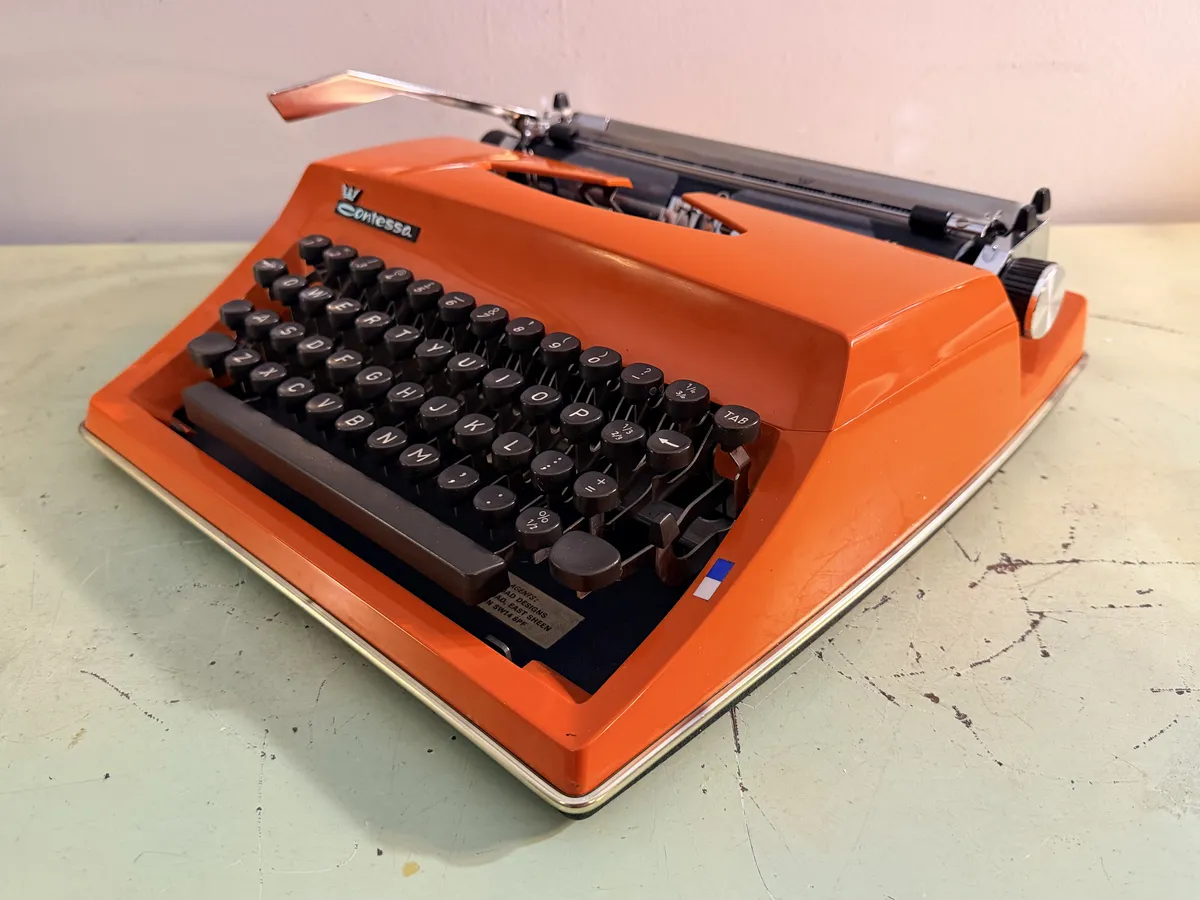
None of those experiences is objectively “better” than another.
They're simply different.
The same is true of the different shift mechanisms. On a carriage-shift machine, pressing the Shift key literally lifts the carriage to reach the capital letters. You can feel the entire machine move beneath your hands. On a segment-shift machine, the type basket moves instead while the carriage stays put. The touch is lighter, quicker, and generally less tiring during long writing sessions.
Neither system is superior to the other, and the shift mechanism that you prefer will be a matter of feel. Some people love the satisfying mechanical heft of carriage shift. Others will never return to a carriage-shift after spending time on a smooth segment-shift machine.
Think about ribbon, too. Do you want a standard black ribbon? Black and red? A speciality color? Do you want the crispness of nylon or the bold print of cotton? Do you care whether the machine uses universal spools or proprietary ones? Is there a particular typeface you've fallen in love with? Script? Italic? A technical face? Maybe you've always wanted an olive-green Olympia or a robin's-egg Royal.
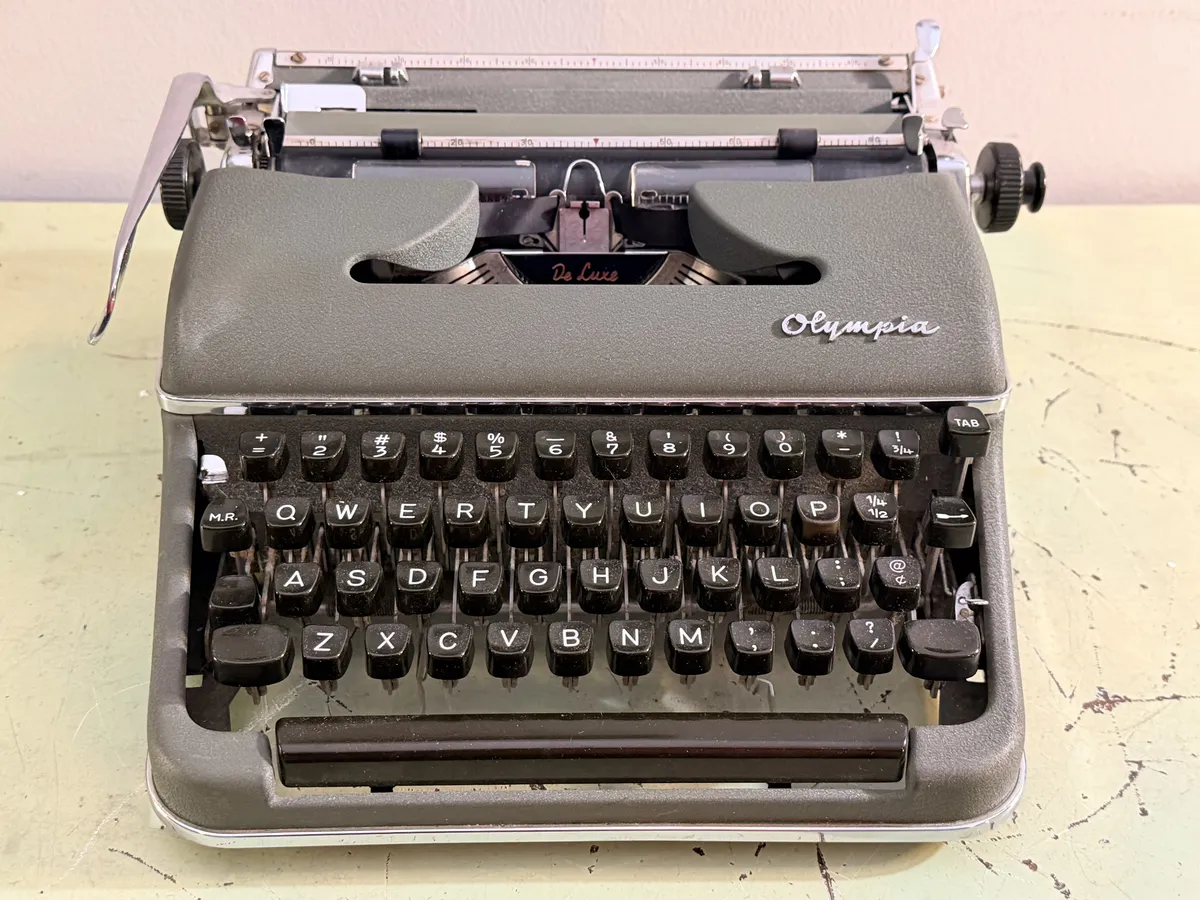
Those are perfectly good reasons to choose one machine over another.
The important thing? Make sure they're your reasons.
Before you click "Buy It Now," imagine the first quiet hour after the package arrives. You've made coffee. The paper is loaded. The room has settled down.
What do you want typing to feel like?
Do you want to feel as though you've just won a long footrace? Like you've beaten a difficult game? Like you've stepped into a detective novel for an afternoon? Like you're firmly grounded in the real world, or floating somewhere out among the stars in one you've invented yourself?
The answer to that question will narrow your search far more effectively than any list of "best" typewriters ever could.
The Five Things I Look At Before I Even Read the Description
Once I know what kind of machine I'm hoping to find, I start looking at the listing itself. Before I read a single word, there are five things that almost always catch my attention.
1. The Carriage
The carriage is one of the best places to spot trouble quickly. Does it appear straight? Does it sit square on the rails? Is anything obviously bent or twisted? Does it look shiny or glazed?
A carriage that has taken a significant impact can be one of the more difficult things to put right. One good photograph often tells you more than you might expect.
2. The Case
I don't just ask whether there's a case.
I want to know what condition it's in.
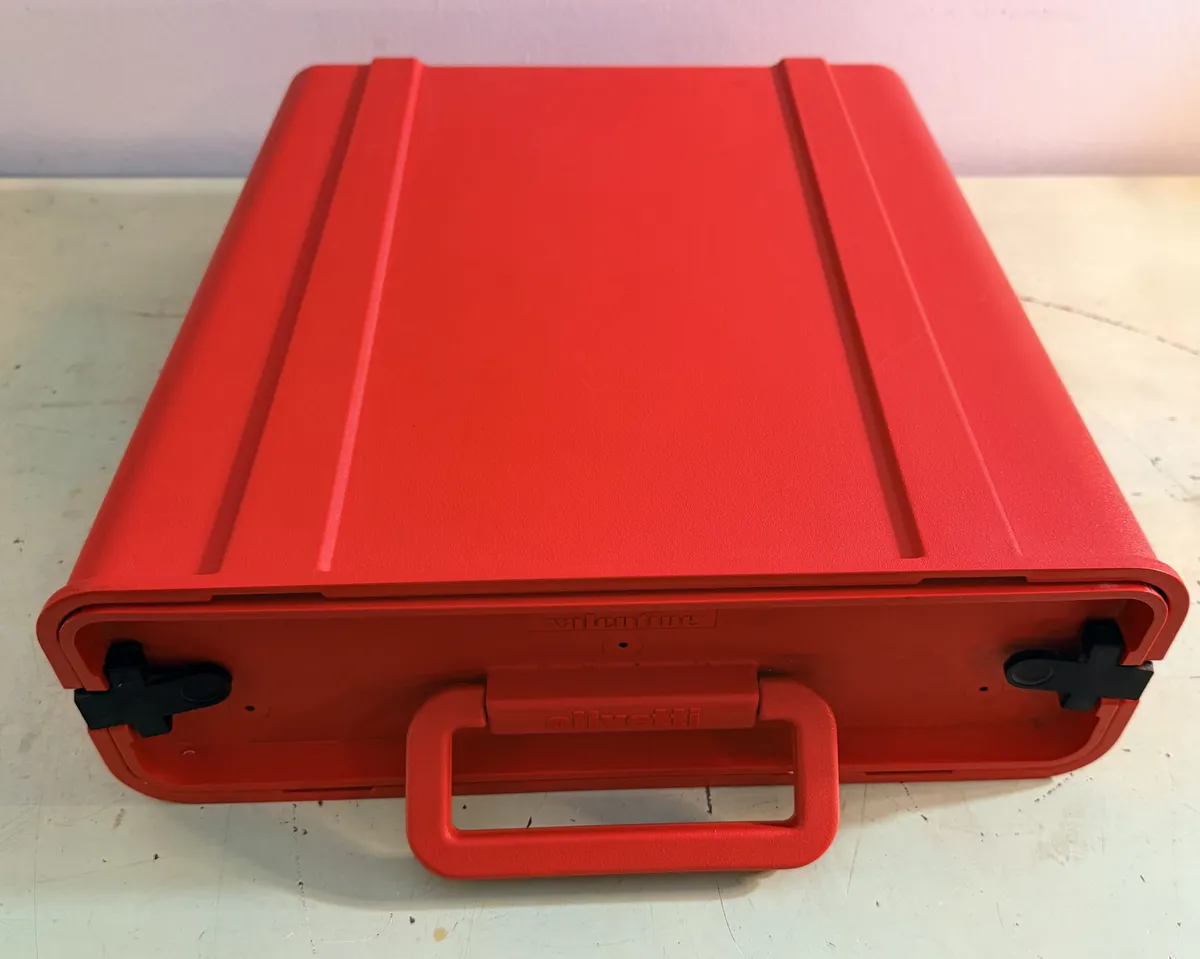
Does the machine secure properly inside it? Are the latches intact? Does the handle look trustworthy? Cases are often treated as accessories, but on portable typewriters they're part of the machine's survival kit. Many of these typewriters reached us in one piece because they spent decades protected by a well-built case.
3. The Platen
The platen, that black rubber roller behind the paper, deserves a close look whenever the photographs allow it.
Most vintage platens are firm. That's normal.
What I'm looking for is obvious cracking, flat spots, deep deterioration, or signs that the rubber has begun to fail. A typing sample can often tell you more than the photographs, so if one isn't provided and you're seriously considering the machine, it never hurts to ask.
4. The Seller's Language
Now, I start reading.
I read everything.
Then I read it again.
The photographs are there to make you want the machine. The description is where the seller quietly tells you what the photographs couldn't.
Sometimes photographs deceive because lighting is flattering or the angle happens to hide something. And, for as many bad typewriter photos as there are on eBay, some people work surprisingly hard to make photographs deceptive. Either way, don't let attractive pictures do all of your thinking for you.
If the description simply says "works great," that's not really a condition report.
Ask questions. Does the bell ring? Do the margins hold? Does the ribbon advance? Has it been typed on recently?
The more specific your questions are, the more useful the answers usually become.
One final thought: even a carefully described typewriter can arrive needing a small adjustment. These are precision mechanical machines, many of them fifty to one hundred years old. Even minor bumps during ordinary parcel handling can knock something just far enough out of adjustment to need attention. That's simply part of buying and owning vintage machinery.
5. The Shipping Photos
Shipping isn't what happens after the purchase.
Shipping is part of the purchase.
If the seller includes packing photographs, study them.
Can the machine move inside its case? Can the case move inside the box? Is the carriage restrained appropriately? Is there enough empty space for the typewriter to build momentum during transit?
A beautifully restored typewriter can be ruined by careless packing. An honest seller who understands shipping is often worth paying a little more for. Talk to the seller about proper shipping before the sale to ensure you have the best chance of receiving a working typer.
Buy the Machine That Makes You Want to Write
There's a reason I haven't recommended a single model in this article.
I don't think there's one best typewriter.
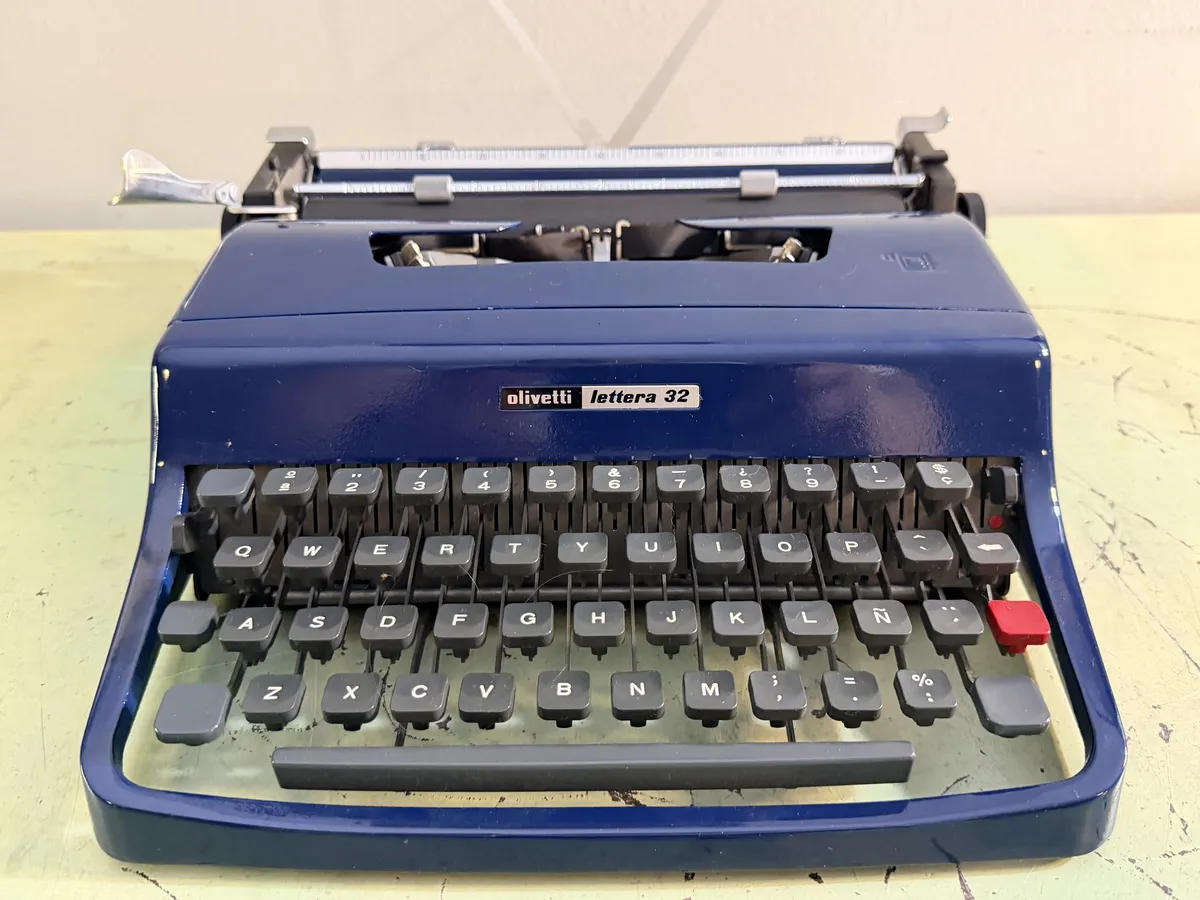
There are certainly machines I'd recommend more often than others. There are models I trust, models I think are undervalued, and models I'd happily own again. But none of that matters as much as finding the machine that suits you.
The goal isn't simply to avoid buying a lemon. It's to find the typewriter that makes you roll in another sheet of paper instead of putting the dust cover back on. That's the machine you'll still love six months from now.
And in the end, that's absolutely the one worth buying.