the things we keep.
I spend a lot of my time sitting in front of very old things, an obvious occupational hazard when you sell and repair typewriters. But every once in a while - usually when I have a machine open on my bench, and I'm trying to figure out why some tiny bit of wire that's been doing the same job since the forties has suddenly decided not to do it anymore - I stop and think about the fact that the machine is still here at all.
What goes through my head is essentially the same stuff that goes through my head anytime I see a still-functioning-but-very-old thing. It was made to last. It was built to work. More importantly, it was built to work in perpetuity with repairs that could be made by the average person or somebody nearby who knew what the hell they were looking at. These weren't machines designed never to break, because of course they broke. They were machines designed with the assumption that breaking and being broken forever were two completely different things.
And so machines that were supposed to have useful lifespans of ten, twenty, thirty, forty, or fifty years actually ended up having those lifespans. Then, in some cases, they doubled them. I regularly work on typewriters that are twice as old as I am, and that will certainly still be capable of typing well after I'm dead.
There's another reason they're still here, though.
Somebody kept them.
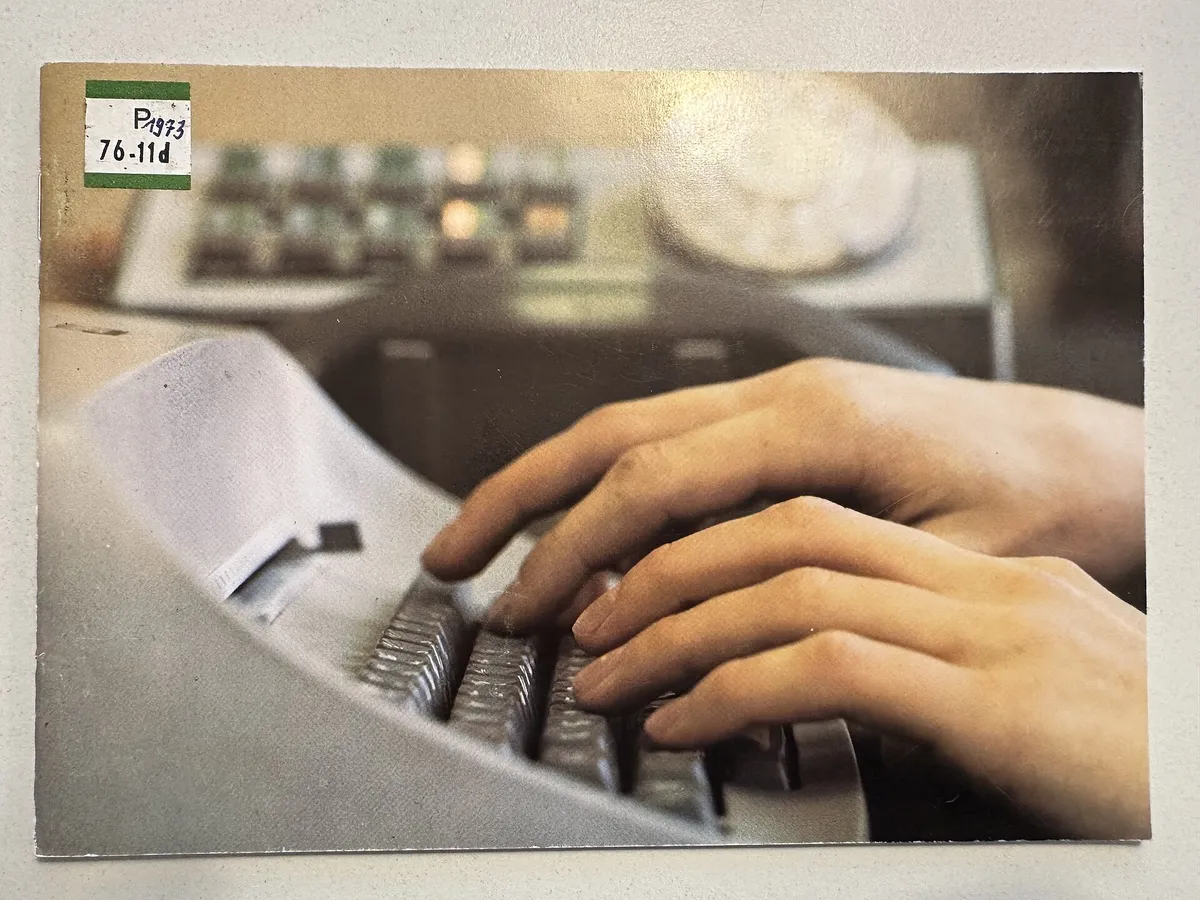
Having, owning, and keeping
I think there's a distinction between having something, owning something, and keeping something. To have something simply means it's in your possession for now. To own something indicates a sense of belonging. The thing is yours, and that ownership gives you some authority over it. You can determine for yourself what happens to it, including using it in ways the manufacturer might not have intended.
Keeping something is different still. Lots and lots of people have typewriters in their homes that never get used. They're on bookshelves, in corners, and under glass. They're props and decorations and little mechanical signifiers of a time we make believe was simpler than ours. But a typewriter begs to be used, and interestingly enough (from a mechanical perspective), using the damn thing is one of the ways you keep it alive.
Because a typewriter that sits unused for decades isn't really being lovingly preserved. Oil and grease collect dirt, dust, hair, and skin cells, and gradually become hard varnish. Things within the machine will stiffen. Parts that are supposed to move become very used to not moving. As a matter of fact, one of the very best things you can do for an old mechanical typewriter (and you can tell anyone I told you so) is simply to type on it, because it's the use of the things that we have that makes keeping those things so important.
You can have something without owning it, and you can own something without really keeping it.
Keeping is a verb. And I suppose over the years I've become deeply suspicious of noun-ing things that should be verb-ing. I'll get to that in a bit.
We used to buy the damn thing
What we see under the subscription model is that less and less is owned by the people. More and more is parceled out to us in bits, pieces, and increments as we pay for it in a monthly or weekly fashion. I think that takes the teeth out of ownership as an American value, because ownership isn't supposed to mean that I paid you money, and you have now granted me conditional access to something until either I stop paying you or you decide to change the conditions.
The most annoying version of this is the subscription services that simply keep charging you. A couple years ago the Federal Trade Commission said it was receiving dozens of complaints a day about recurring subscription and negative-option practices. And what interests me most is what happens when the subscription mentality starts to infect things we supposedly actually bought.
Because owning whatever, as I understand it, entitles you to do what you want with it. I can open the thing, change the thing, repair the thing, take it to somebody else who can repair the thing, give it to my kid, paint it Olivetti blue, or run it over with my car if I want to. There's no oversight, there's no babysitting, and there's no micromanaging. It's just you and the object of your desire... and whatever you decide to do with it.
Increasingly, though, what we call ownership looks more like borrowing something from somebody who gets to set the rules. The FTC has documented manufacturers requiring special or proprietary tools, restricting access to diagnostic tools and replacement parts, using software to impede unauthorized repairs, and imposing licensing or post-sale restrictions that make independent repair more difficult. The FTC's report to Congress found "scant evidence" supporting many of the manufacturers' justifications for those restrictions.
Think about just how weird that is. I buy the thing, I bring the thing home, the thing breaks, and somehow the company that already has my money still gets a vote in what I'm allowed to do next. Federal copyright regulations even contain exemptions allowing people, under specified circumstances, to circumvent technological protection measures in devices they lawfully acquired for diagnosis, maintenance, and repair. That is, the law has to contemplate when you're permitted to defeat a technological restriction in order to fix a thing you already own.
This is intentional. This is absolutely capitalism fucking with you. This is capitalism telling you what you're allowed to do with the stuff that used to be considered yours.
And the reason this feels particularly odd to me is that I spend my days working on machines from companies that haven't had any meaningful relationship with that machine in decades. Olympia doesn't know what I'm doing to an SM3 on my bench, nor does it care. Royal is unaware what parts I'm putting into a Quiet De Luxe. Nobody at Olivetti has to send me a six-digit code before I can replace a linkage inside a Lettera 32. The manufacturer sold the machine, the customer bought it, and at some point the transaction actually ended.
We should be so lucky.
The right wants the nouns
This is where I become considerably less patient with the American right-wing, the same people who cannot stop banging their drums about freedom, private property, and self-reliance. The whole MAGA aesthetic is built around a particular image of American independence... the family business, Dad fixing something in the garage, the local hardware store, the church, the old pickup truck, Main Street, the tradesman who knows how to fix or preserve something with his hands, and the family that owns its home outright and passes heirlooms from one generation to the next.
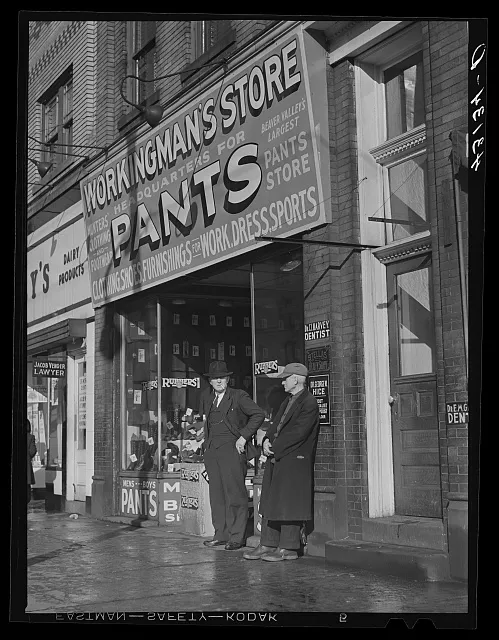
The thing is, I don't dislike most of that stuff. I own the repair shop. I attend the church. I like family businesses. I like people who know how to make things and fix things. I obviously like old stuff. My last essay was largely about the danger of confusing the fact that the typewriters were better with the idea that America was better, and so I'm certainly not interested in resurrecting the social scaffolding of 1955 because somebody made a really nice Royal Quiet De Luxe that year. But rejecting that awful sort of nostalgia doesn't require us to pretend that absolutely nothing valuable was lost.
What pisses me off most about the MAGA version of the past is the hypocrisy. The right has taken all of these things - the ownership, self-reliance, local businesses, trades, church, family, community, and tradition - and turned them into a pastiche of an America that supposedly once existed and no longer does, while defending an economic system that makes the actual practice of those things harder. They want the old truck in the campaign ad. They don't seem particularly interested in an economy where an ordinary person can keep the old truck on the road.
The nostalgia isn't some marginal feature of the politics. In 2016 66 percent of Republican and Republican-leaning voters polled for Pew said life for people like them had been better fifty years earlier. Among Trump supporters, the number was 75 percent. Of course, the desire to "return" is right there in the slogan. What I'm interested in is what exactly we're supposed to be returning to.
Because if you're going to sell me private property as an American virtue, I want private property with some teeth. If you're going to sell me self-reliance, I want the ability to rely on myself. And if you're going to idealize the repair shop, then I want the person in the repair shop to be able to repair the thing.
This absurdity became especially clear this summer with, of all things, farm equipment. In July, the FTC and five states reached a settlement with John Deere requiring the company to make important repair resources available to farmers and independent repairers on terms comparable to those available to Deere dealers, including the ability to read and reset fault codes, reprogram electronic components, pair newly installed parts, and access technical repair information.
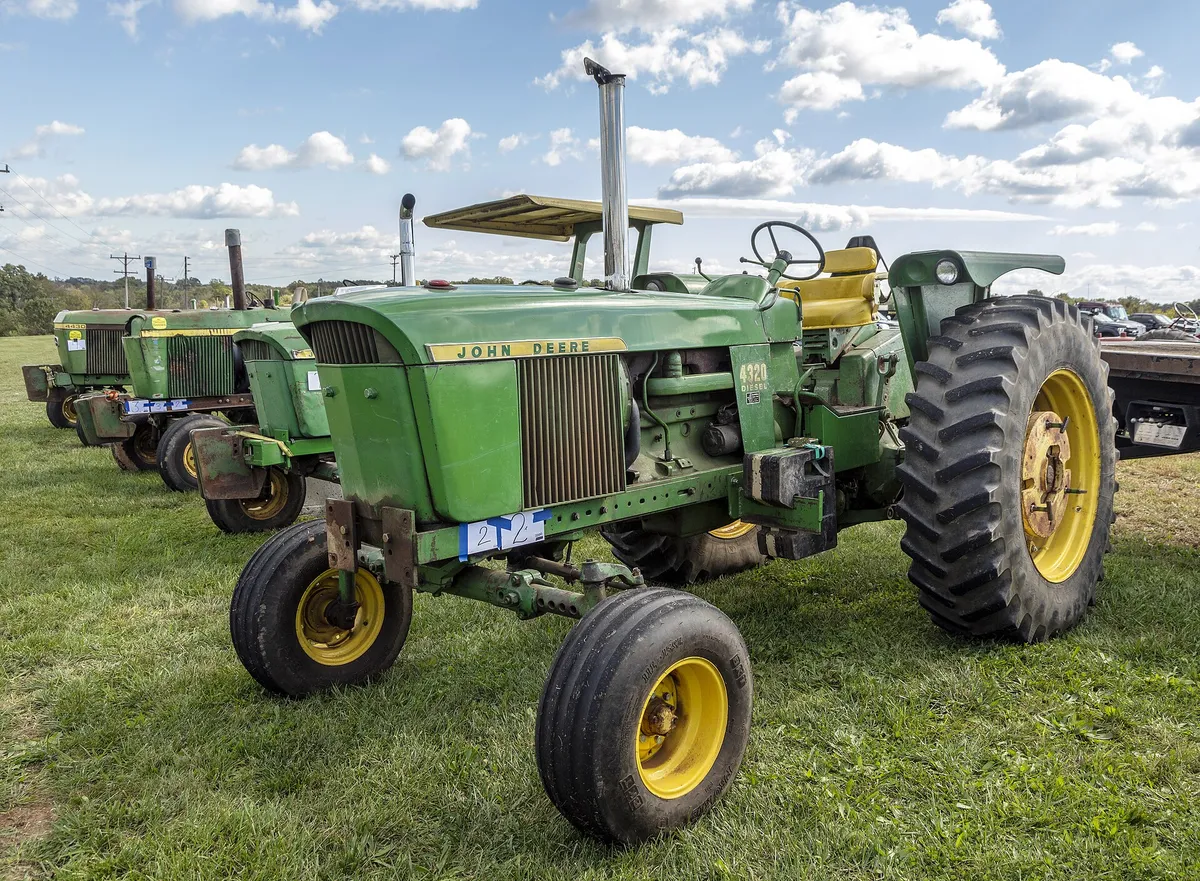
Come on. We have somehow managed to fetishize the self-reliant American farmer at precisely the same time that a farmer can need access to manufacturer-controlled software to pair a replacement component with the tractor he ostensibly owns.
That's absolutely bonkers.
Freedom should mean leaving me alone
When I talk about freedom, what I mean is that decisions ought to be made at the absolute lowest level of responsibility necessary for the decision to be made. Most people can decide for themselves what they want to do or don't want to do, and, in the instances where they can't, they'll typically go to friends or family. If something can't be sufficiently managed within a family, perhaps it should be dealt with as a community, then as a village or town, and upward to the next level only as necessary.
What I'm trying to say is that freedom means the least amount of involvement necessary to do the most amount of whatever you want to do, provided that you're not harming yourself, somebody else, or society. A typewriter is almost comically good at this. If you want to type something, type it. If you want to take the machine apart, take it apart. If you don't know how, find somebody who does.
And rest assured, choosing to hand something to somebody who knows more than you do is still a choice. The problem isn't dependence on expertise. The problem is compulsory dependence on an intermediary who has been given control over the thing you supposedly own. I'm the Typewriter Mechanic. Royal doesn't need to enter the relationship. Olympia doesn't need to authenticate the repair. Smith-Corona cannot remotely decide that the part I just put into your machine is unauthorized. Nobody needs to know what you're doing, and nobody needs to approve it.
You bought the damn thing. It's yours.
What we've lost-lost
What we've lost culturally as we've moved away from this model is important, but what we've lost-lost is just as stark. Disposable culture means stuff ends up in landfills and oceans. It means we're constantly extracting more material, consuming more energy, shipping more products, and manufacturing replacements for things that already existed.
I looked up the stats and it turns out in 2022 alone, the world generated 62 billion kilograms of electronic waste, and only 22 percent of it was formally collected and recycled in an environmentally sound manner. So the amount of e-waste being generated is growing considerably faster than documented recycling. I don't know how else to look at numbers like that and conclude that there is absolutely no upside to a culture of disposability.
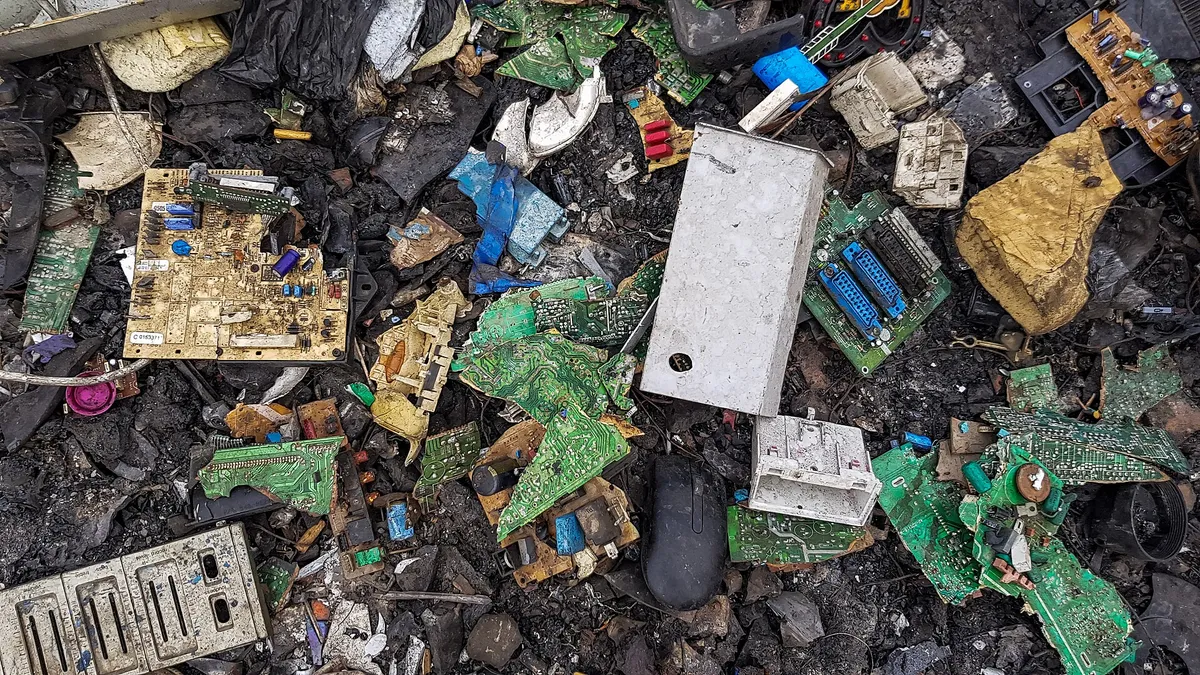
But even the giant pile of shit we're leaving behind isn't the whole problem, because the economic transaction itself never really ends. The system continues to feed off of you. It continues to make money off of you. It continues to require you to spend more of your income on half-solutions and borrowed goods.
And while perhaps it's true that nobody is forcing me to subscribe to Netflix or buy an iPhone, what exactly is the alternative? If I'm sitting here at my computer produced through an exploitative global supply chain, sending something to my phone produced through slave labor, across infrastructure built by the same economic system, in order to criticize that system, am I really doing that great a job of opting out? I'm trapped inside the system, too. I'm just as dispossessed as the next guy.
What we're actually being dispossessed of
We've lost so much more than just our property as a result. We've been sapped from our churches and our communities because what we need for them is time, stability, and ability. In a capitalistic economy, time is sucked away from us. The ability to do things is replaced with responsibilities that we have. Stability has become next to impossible to achieve for the people who were already most vulnerable to having it taken away from them: minorities, marginalized people, people of color, LGBTQIA people, and women.
Community takes time. Being the person who goes to the borough meeting, coaches the Little League team, helps at the church dinner, knows the person who owns the hardware store, takes a meal to somebody who is sick, or sits around bullshitting with the same people often enough that they eventually become your friends takes time. The BLS' 2025 "American Time Use Survey" found that organizational, civic, and religious activities accounted for an average of about 17 minutes per day among Americans 15 and older. For people between 35 and 44 - the years when a lot of us are simultaneously working, raising children, caring for houses, and trying to remain recognizable to ourselves - it was about ten minutes.
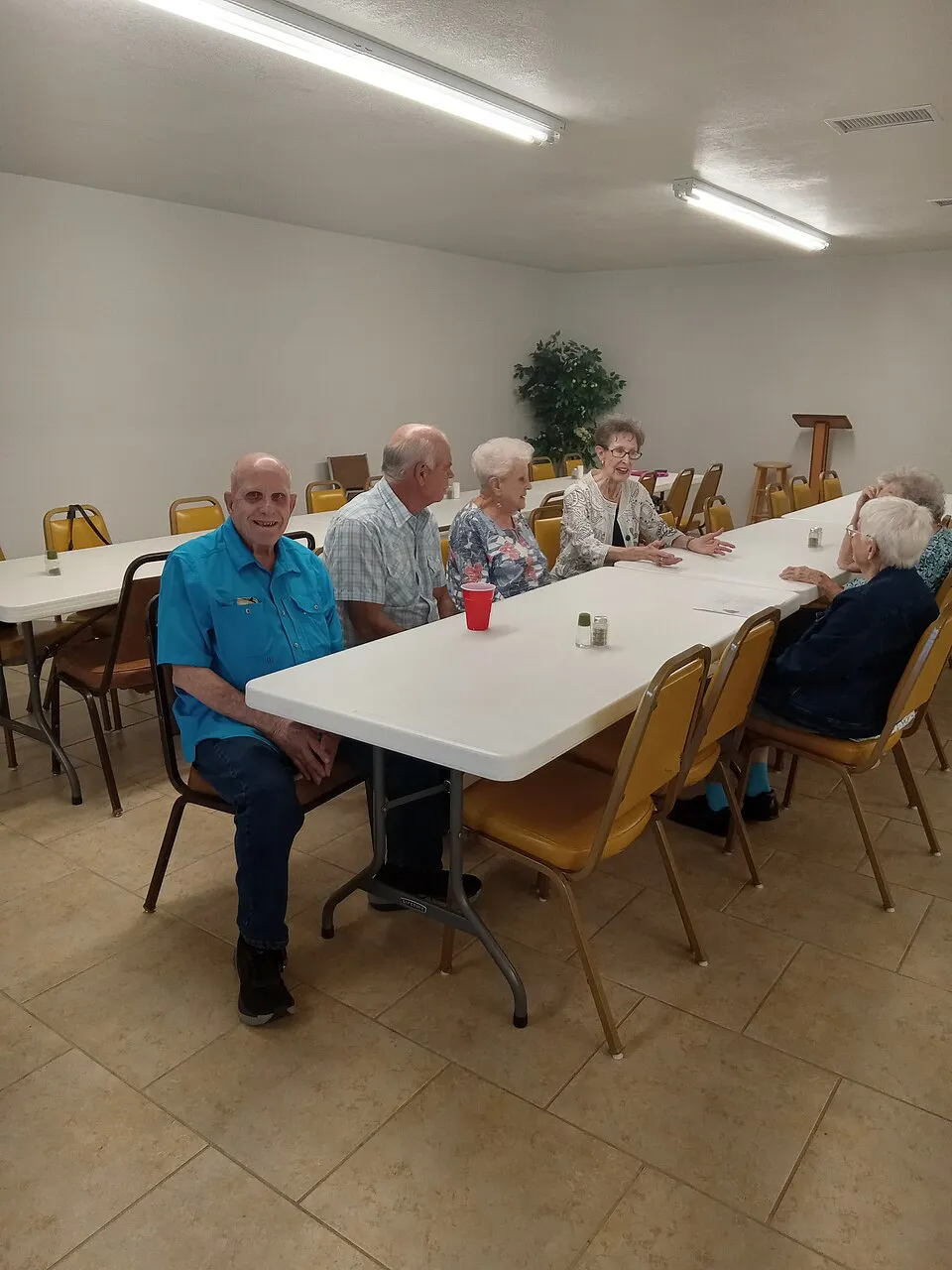
You can't simultaneously lament the collapse of community and construct an economy in which everybody is too fucking tired to participate in one.
And this is where I think the argument gets considerably bigger than typewriters, or even ownership, because what we're actually being dispossessed of is something entirely more insidious. We're being dispossessed of the ability to self-actualize. It's not just property, time, agency, or community. It's all of those things and the ability to view yourself wholly, to accept yourself as a functional and substantial person, a person capable of doing things, making decisions, producing something, and knowing that some part of you went into producing it.
Because cows in cattle chutes have very, very little agency.
Christian is a verb
This is also where I have a problem with the religious right, and I say that as someone lukewarm on the category but as a follower of Christ. The religious right has a tendency to confess Christianity as a thing that it has, a thing that it possesses... the crosses, the churches, the Bibles, the slogans, the Christian imagery, and the Christian nation. Pew said in 2024 that 67 percent of Republicans and Republican-leaning Americans wanted the Bible to have at least some influence over American law, compared with 32 percent of Democrats and Democratic leaners.
But Christianity, as I understand it, is an enacted faith. Christian is a verb. It's a doing-thing, not a being-thing. Paul writes in Galatians about the fruit of the Spirit (singular) and then describes love, joy, peace, patience, kindness, goodness, faithfulness, gentleness, and self-control. I don't understand those things as a collection of spiritual possessions that a sufficiently holy person accumulates. They describe what the life is supposed to do. The Christian in community does the thing.
And this is where I come back to the typewriter, because keeping a faith or a tradition means essentially the same thing to me as keeping an object. It begs to be used. Simply putting it in a corner or bandying it about whenever it's advantageous to us is emphatically not the same thing as keeping it alive.
If Christianity is something we possess rather than something we do, Christianity has no spine. If ownership is something that's recorded on a receipt rather than something that lives in my home, I can no longer exercise authority over the thing. If community is an aesthetic or a feeling rather than something people participate in, then community falls apart at the first sign of trouble. Tradition becomes imagery, performance, a vague feeling rather than practice.
And a typewriter becomes décor.
A typewriter is a tool of resistance
I do see what I do at The Typewriter Mechanic as political, and I'm not talking about the blog, what I believe, the website, or the listings I post on eBay. I'm talking about literally taking an old machine, opening it up, looking at its guts, deciding what's nonfunctional about it, making it functional again, and putting it back into use.
I also don't believe repairing old things is inherently radical. I think what's radical is me. I am radical, and that makes the work political, because in the repair process, what I'm actually restoring is another person's ability to use the thing in whatever way they choose. I'm restoring for another person the ability to be a doing thing, and a typewriter is a particularly beautiful and dangerous thing to restore because what it makes is language.
The average person probably can't own a radio station these days. The average person can't own a television network. A lot of the major means of communication are simply outside the purview of the average citizen. But you can own this thing. You can put it on a desk, put a piece of paper into it, and sit down.
Every word, every phrase, every sentence, every bit of poetry, every love letter, every list, and every note written in anger are modes of expression that allow a person to get from point A to point B by doing nothing but sitting at the keyboard. The machine doesn't know what you're writing. It doesn't approve or disapprove. It doesn't moderate you. It doesn't need an account, a software update, or a network connection. It doesn't require anybody's permission.
It's just you and the object of your desire and the output of your desire.
That's what makes a typewriter simultaneously so beautiful and so dangerous.
The things we keep
I think about the fact that somebody once kept each of these machines. Somebody bought this typewriter when it was new and typed on it. Somebody moved it from one house to another, put it back into its case, and decided, probably more than once, that they weren't going to throw it away. Maybe it sat in a closet for twenty years. Maybe somebody's kid took it to college. Maybe somebody died, somebody else cleaned out the house, and for whatever reason this one object escaped the dumpster. I almost never know.
Eventually it ends up with me, and I open it up, swear at it, clean something that hasn't been touched since Eisenhower. Eventually, hopefully, the keys move again, the carriage advances when it's supposed to, the bell rings where somebody set the margin, and the machine does the thing it was made to do.
Eventually, I send it to somebody else.
And what I really hope is that they don't put it on a shelf. I want them to sit down and type. I don't care what they write. It doesn't have to be radical. It doesn't have to be profound. It doesn't even have to be good. It just has to be theirs.
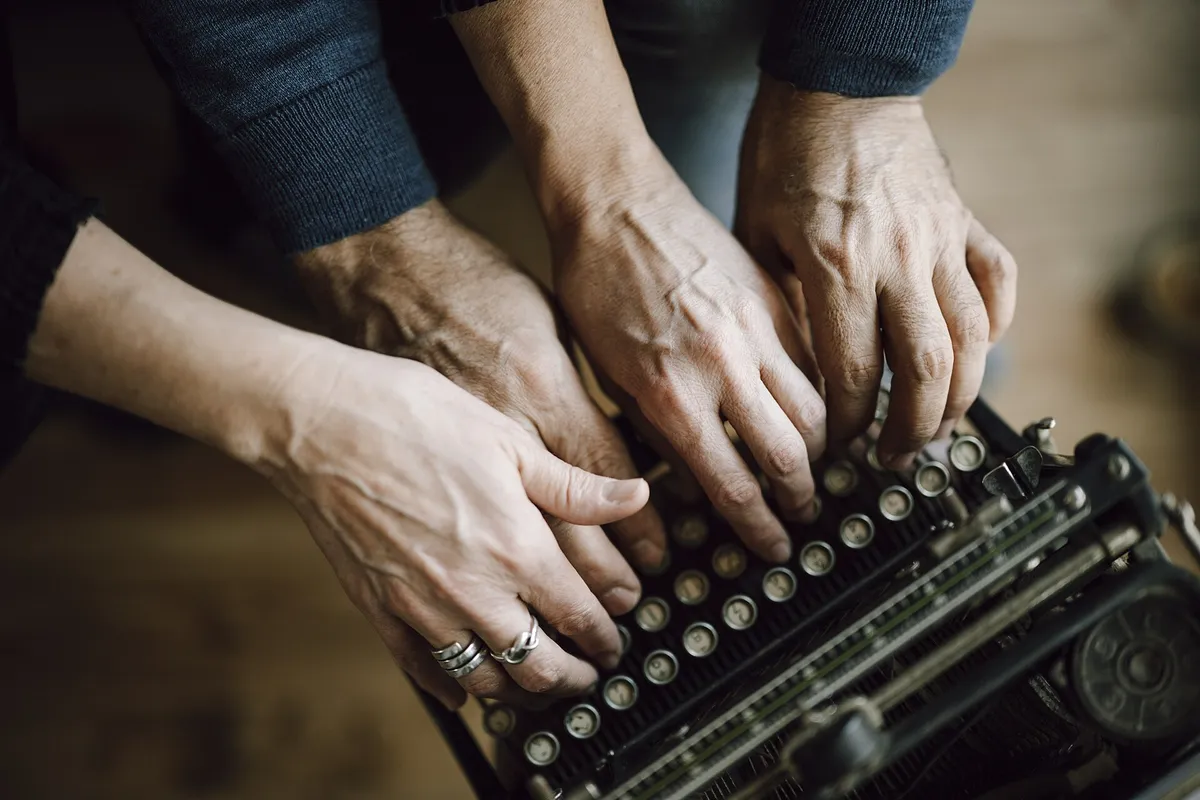
Because when you sit down and put something onto a page, you are taking a part of yourself and making it into another physical thing. You're taking your mind, your thoughts, your views, your anger, your love, your grocery list, or whatever else happens to be rattling around inside you, and you're making copies of parts of you. Those copies can be folded up, mailed across the country, shoved into a drawer, discovered fifty years from now, or read by somebody who hasn't even been born yet.
Those copies can, and some are sure to, outlive you.
That's an amazing thing to be able to accomplish, and it's all done by the power of two thousand mechanical parts interacting with each other and moving in tandem inside a machine somebody else decided was worth keeping.
Maybe that's the thing I find most remarkable about all of this: somebody kept the machine, and because they did, somebody else gets to use it to make something that might be kept.
Sources
[1] Federal Trade Commission, "Federal Trade Commission Announces Final 'Click-to-Cancel' Rule Making It Easier for Consumers to End Recurring Subscriptions and Memberships," October 2024.
[2] Federal Trade Commission, Nixing the Fix research and workshop materials on repair restrictions.
[3] Federal Trade Commission, Nixing the Fix: An FTC Report to Congress on Repair Restrictions, May 2021.
[4] U.S. Copyright Office, 37 C.F.R. § 201.40, exemptions concerning diagnosis, maintenance, and repair of lawfully acquired devices.
[5] Pew Research Center, "Campaign Exposes Divisions Over Issues, Values and How Life Has Changed in the U.S.," March 2016.
[6] Federal Trade Commission, "FTC, States Secure Settlement with Deere & Company, Advancing Farmers' Right to Repair," July 2026.
[7] International Telecommunication Union / UNITAR, The Global E-waste Monitor 2024.
[8] U.S. Bureau of Labor Statistics, American Time Use Survey — 2025 Results, June 2026.
[9] Pew Research Center, "Christianity's Place in Politics and 'Christian Nationalism,'" March 2024.
Image credits
Hands typing on a vintage typewriter — Shixart1985, Wikimedia Commons, CC BY 2.0.
Store on the main street of Beaver Falls, Pennsylvania — Jack Delano, Farm Security Administration/Office of War Information Collection, Library of Congress, 1941. No known restrictions.
John Deere 4320 D tractor — Acroterion, Wikimedia Commons, CC BY-SA 4.0.
Electronic waste at Agbogbloshie, Ghana — Muntaka Chasant, Wikimedia Commons, CC BY-SA 4.0.
Church of Christ congregation eating meal, Levelland, Texas — Gerardolagunes, Wikimedia Commons, CC0 1.0.
Typing hands — Medea7, Wikimedia Commons, CC BY 4.0.