the biggest lie in vintage typewriters.
Why "Fully Restored" Doesn't Actually Tell You Anything.
All right, folks. Your philosophy class is in session, I’m your instructor, and the topic of the day is epistemic humility. The phrase sounds a lot pricklier than the idea itself, which simply means recognizing the difference between what we are sure of, what we suspect, and what we can't honestly claim to know. In practice, it's the habit of asking, "How do I know that?" before becoming too confident in the answer.
Oddly enough, thinking philosophically (at least in this small way) is one of the most useful habits you can develop when buying a vintage typewriter.
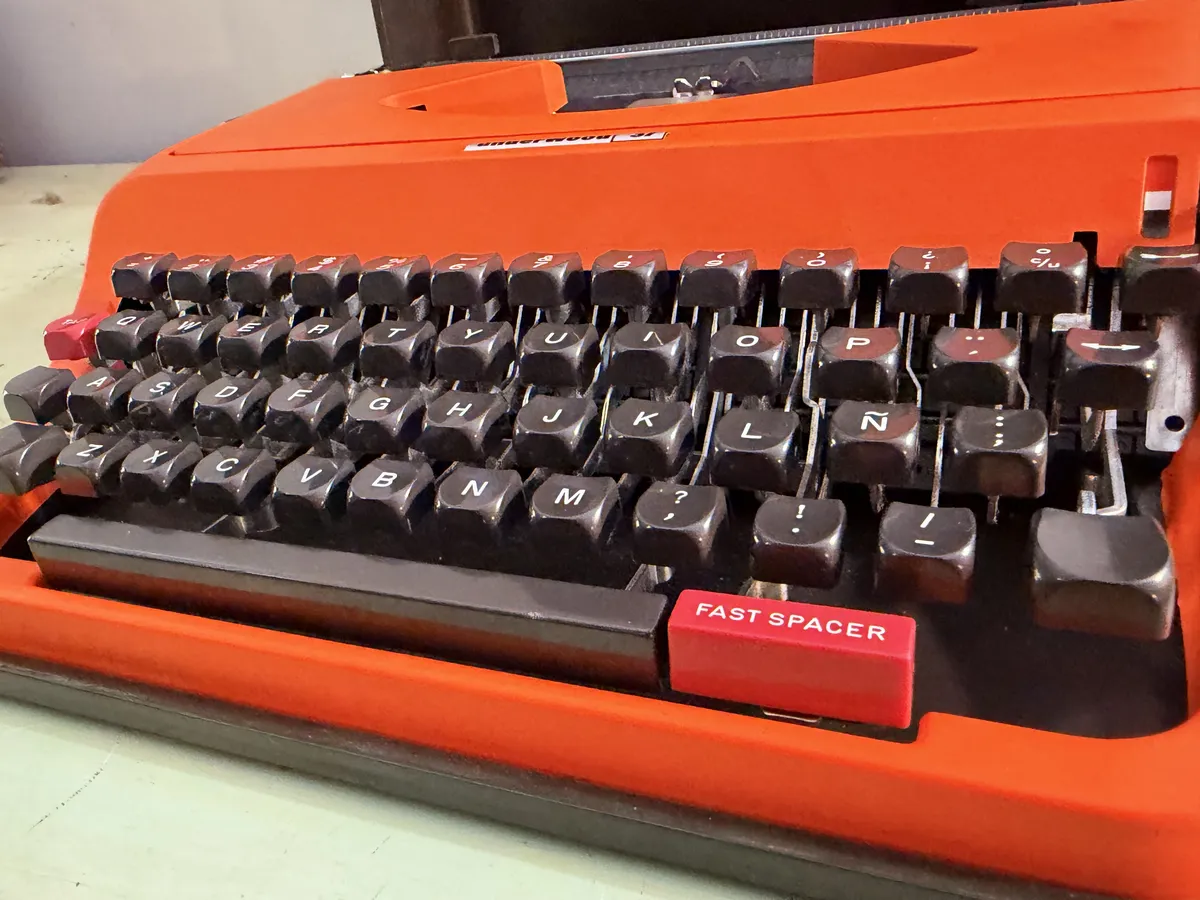
Spend an evening browsing listings and you'll quickly notice certain phrases appearing again and again… Words like rare. Museum quality. Pristine. Tested. Professionally serviced. And perhaps most reassuring of them all are the four syllables of fully restored.
I don't object to any of the above phrases on principle; that would force me to accept an -ism. I object to them only when they're expected to do more work than they're capable of doing.
A Conclusion Disguised as a Description
Look at "fully restored." It sounds and feels wonderfully authoritative. That's what makes it dangerous as I browse for a typewriter with my paycheck burning a hole in my pocket.
The funny thing about fully restored is that it doesn't actually tell me… anything. That's because it isn't a specification. It's a conclusion.
Specifications and conclusions are not the same thing.
If you tell me a machine received a new platen, had its segment cleaned, its escapement adjusted, its alignment corrected, and was typed over the course of several pages, you've actually told me something. If you tell me it's "fully restored," you've told me what you think about the work without telling me very much about the work itself. Maybe your conclusion is entirely justified. I honestly don't know. Perhaps I'd reach exactly the same one. But it's still a conclusion.
We're Shopping Along the Shoreline
Understanding where restoration begins and ends is a lot like understanding where a shore begins and ends. We all agree that five miles inland isn't the shore. We also agree that five nautical miles out to sea isn't the shore. Between those two points, however, perfectly reasonable people disagree, drawing the line in slightly different places.
Restoration occupies much the same territory.
We all recognize the extremes when we see them. The interesting part—and the part buyers actually have to contend with—is everything in between. Almost nobody is shopping for a mud-caked basement find or a museum piece. We're shopping along the shoreline.
A filthy basement find that hasn't seen daylight since the Nixon administration clearly hasn't been fully restored. A machine that has spent forty hours on a careful mechanic's bench almost certainly has. The interesting questions live somewhere between those two extremes, because that's where the decisions are made. What was disassembled? What was adjusted? What was replaced? What was intentionally left alone? Those aren't tedious details.
They are the restoration.
Which is really the point, after all.
“Fully restored” may be a perfectly fair conclusion, but it should come at the end of the evidence, not in place of it. If a seller can show me what was done, what was left alone, and what the machine still does imperfectly, I have something useful. If all I have is the label, I still have questions. It’s not mistrust. It’s simply wanting the words to carry their own weight.
Language Has to Mean Things
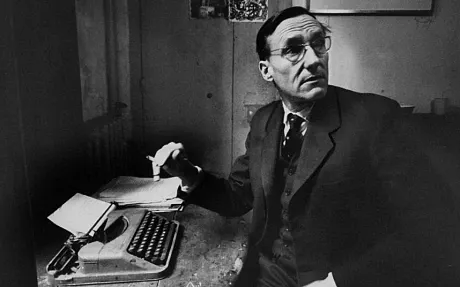
Language, if it's going to be useful, has to mean things. (I read Naked Lunch in college, so I'm certain about this.)
Now, language doesn't need to behave with mathematical precision. Words have never behaved that politely. They drift over time, collecting new meanings and quietly shedding old ones. Pristine, for example, once referred much more closely to an object's original condition. Today we generally use it to mean immaculate. That's not a corruption of language. It's simply language doing what language has always done.
The trouble begins when words become so elastic that they stop narrowing our understanding and start replacing it. We begin mistaking familiarity for precision. We've seen a phrase so many times that we stop asking whether it has actually answered the question we had in the first place.
Think about the number of times you've seen a typewriter—or any antique, really—described as pristine. Or museum quality. Or fully restored. Those phrases create the comforting impression that a difficult question has already been answered.
Often it hasn't.
It's merely been postponed.
Old Machines Settle Into Themselves
This is one reason I've become suspicious of broad claims about old machines.
Because frankly, typewriters settle into themselves over time.
Oil hardens into varnish. Springs compensate with a little extra tension. Linkages wear together until one part quietly begins accommodating another. Leave an old typewriter untouched for long enough and it begins making little bargains with itself. None of this is ideal, and none of it should become an excuse for neglect. (Neither is the world ideal, and we still hope to leave one small corner of it better than we found it.) But it does mean that an eighty-year-old typewriter is far less like a box of independent components than it is a small ecosystem.
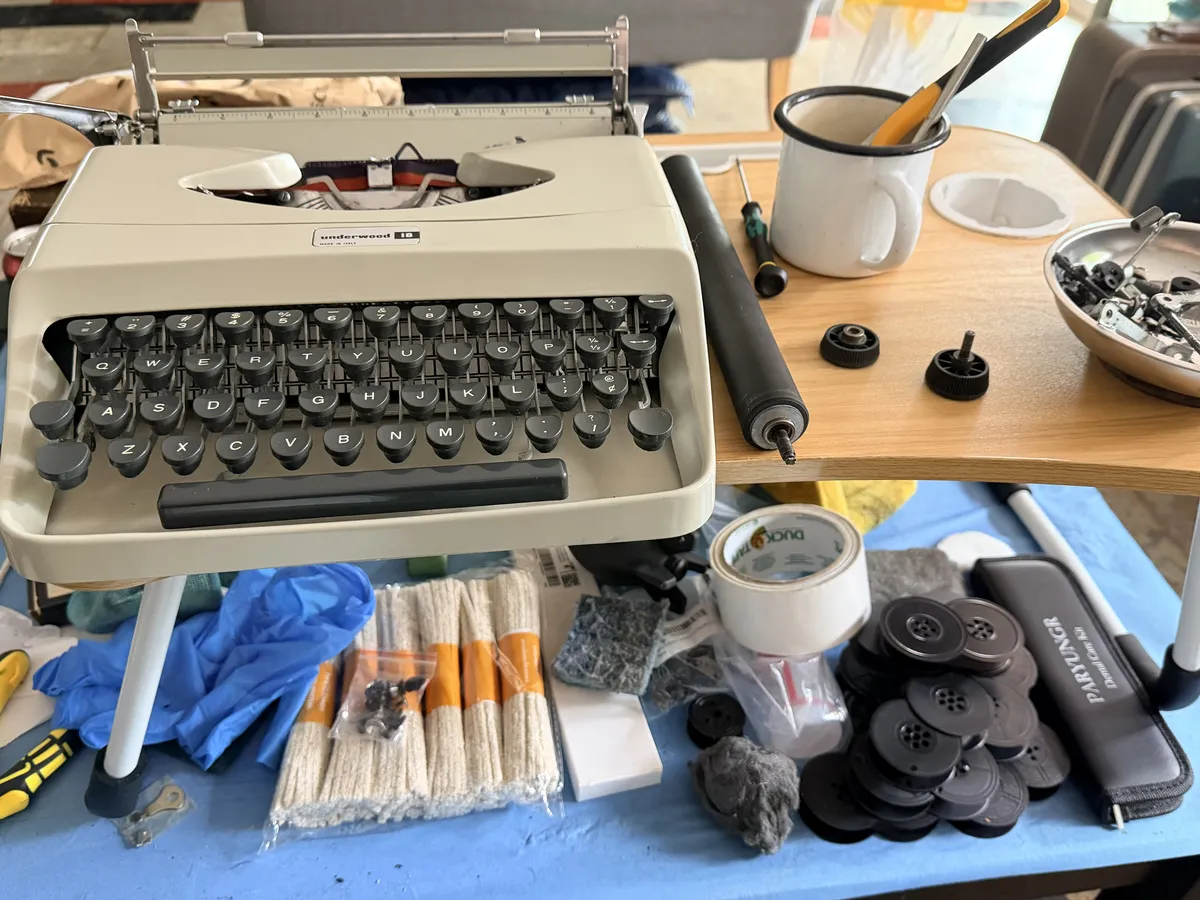
Chesterton once warned against tearing down a fence before understanding why it had been erected. I think about that line surprisingly often at the workbench.
Every mechanic eventually has the experience of cleaning away some ancient varnish, congratulating himself on a job well done, and then discovering that a spring had spent the last forty years compensating for precisely that varnish.
The machine isn't punishing you.
It's teaching you something.
Usually about your own confidence.
I've said before that old typewriters are patient teachers. They rarely tolerate overconfidence.
What I Actually Look For
All of which brings me to the question I wish more buyers would ask.
Not, "Has this typewriter been fully restored?"
But, "What exactly did you do?"
Everything changes after that.
Ask to see the type slugs. They don't have to sparkle. In fact, if they look as though they've just returned from a dental cleaning, I become suspicious for entirely different reasons. They do, however, need to be clearly photographed. The slugs tell me about cleanliness, wear, corrosion, and—perhaps most importantly—the typeface you're actually buying.
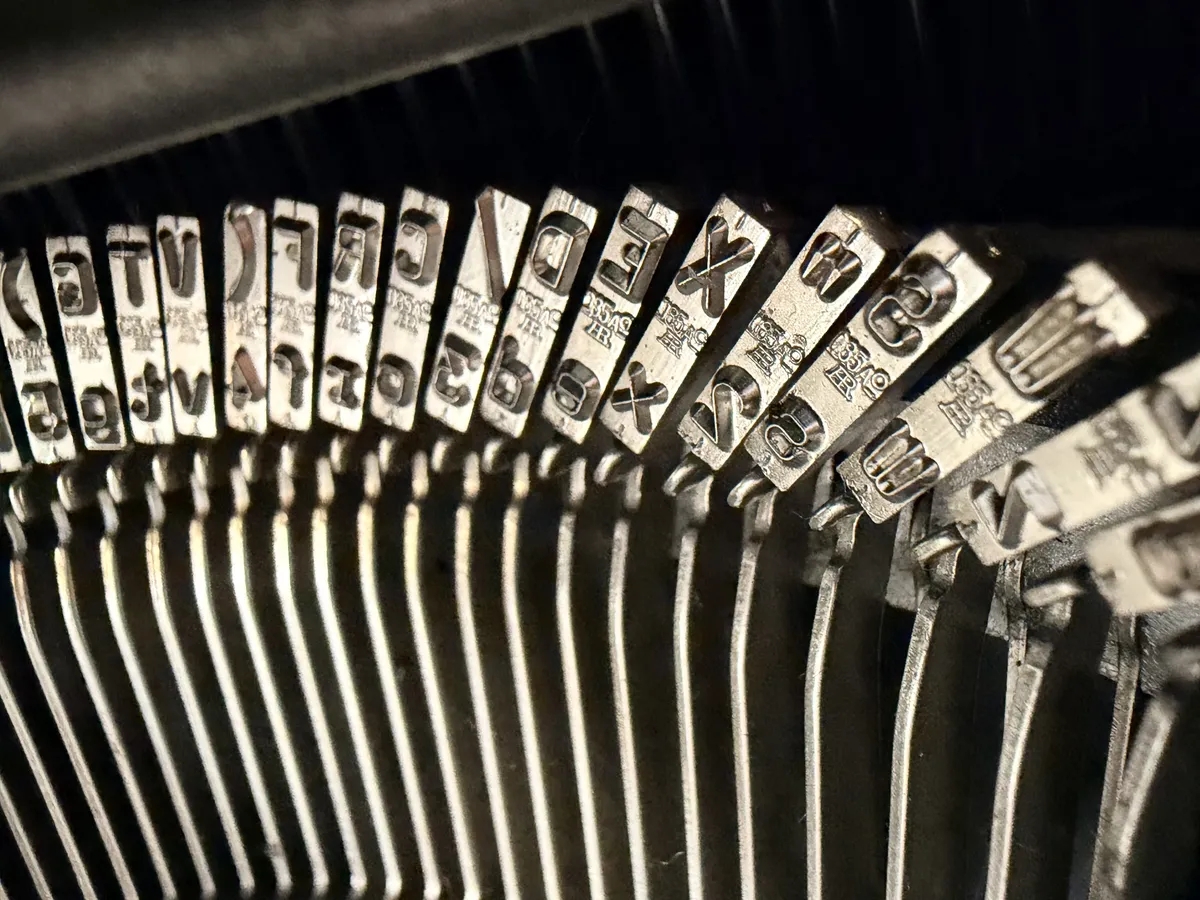
Ask for a typed sample if one isn't already included. Not because you expect literary brilliance from the seller, but because a typed page tells you an astonishing amount about alignment, ribbon condition, impression, escapement behavior, and whether the seller has actually spent any meaningful time with the machine.
Look carefully at the keyboard. Missing keys are far more common than many buyers realize, and they're surprisingly easy for sellers to overlook.
Every so often you'll even encounter a listing apologizing that the machine is "missing the number one."
(It almost certainly isn't...
Most manual typewriters simply use the lowercase "l.")
That one never gets old.
Here's another little trick I use. Read the description slowly and, for just a moment, ignore the adjectives.
Circle the verbs.
Cleaned.
Adjusted.
Aligned.
Recovered.
Replaced.
Those words describe observable work. They invite questions, and good sellers are usually delighted to answer them. Adjectives, by contrast, tend to arrive with a request:
Please trust me.
Descriptions ask for something much more reasonable.
Judge for yourself.
Don't Buy Adjectives
That's why my own listings are probably longer than they need to be. I could save myself an awful lot of typing by declaring every machine "fully restored" and calling it a day. But I'd rather tell you exactly what I know, exactly what I did, exactly what I chose not to do, and exactly what still isn't perfect.
It isn't because I think uncertainty is a virtue.
It's because I think precision is.
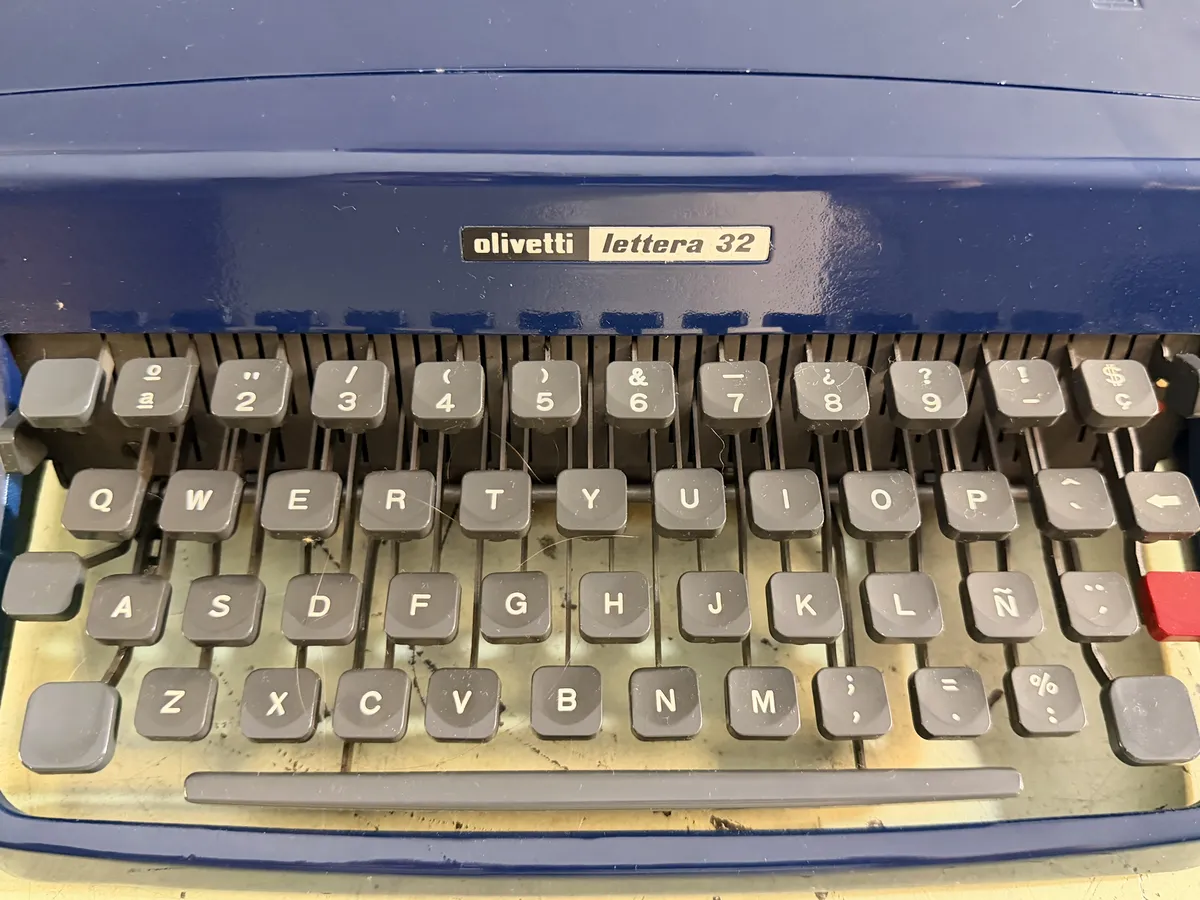
Buying a vintage typewriter requires a small act of faith. You're trusting a stranger you've probably never met to describe an object you've never held. That trust is too important to be built on adjectives alone.
In the end, epistemic humility amounts to something wonderfully ordinary. Ask better questions. Demand better answers. And whenever someone offers you a conclusion, ask to see the evidence that got them there.
Don't buy adjectives.
Buy descriptions.
____