before you "fix" something... make sure it's broken.
There's this phrase you see constantly when you’re shopping for old typewriters, and that phrase is fully restored.
I don't like the phrase and I don’t use it. Partly because I don’t really know what it means. Restored to… what? Does it mean back to its original state? Do you want it to look like it just came new out of the box in 1962? Or are you looking for more of a museum-quality situation, where perhaps every screw hasn’t been polished and every bit of patina hasn’t been addressed, but the machine exists in a permanent, high-quality preservation condition?
Those are two different things, but they both mean restoration. Which one is more fully restored than the other? I honestly can't answer that (but I dare you to try).
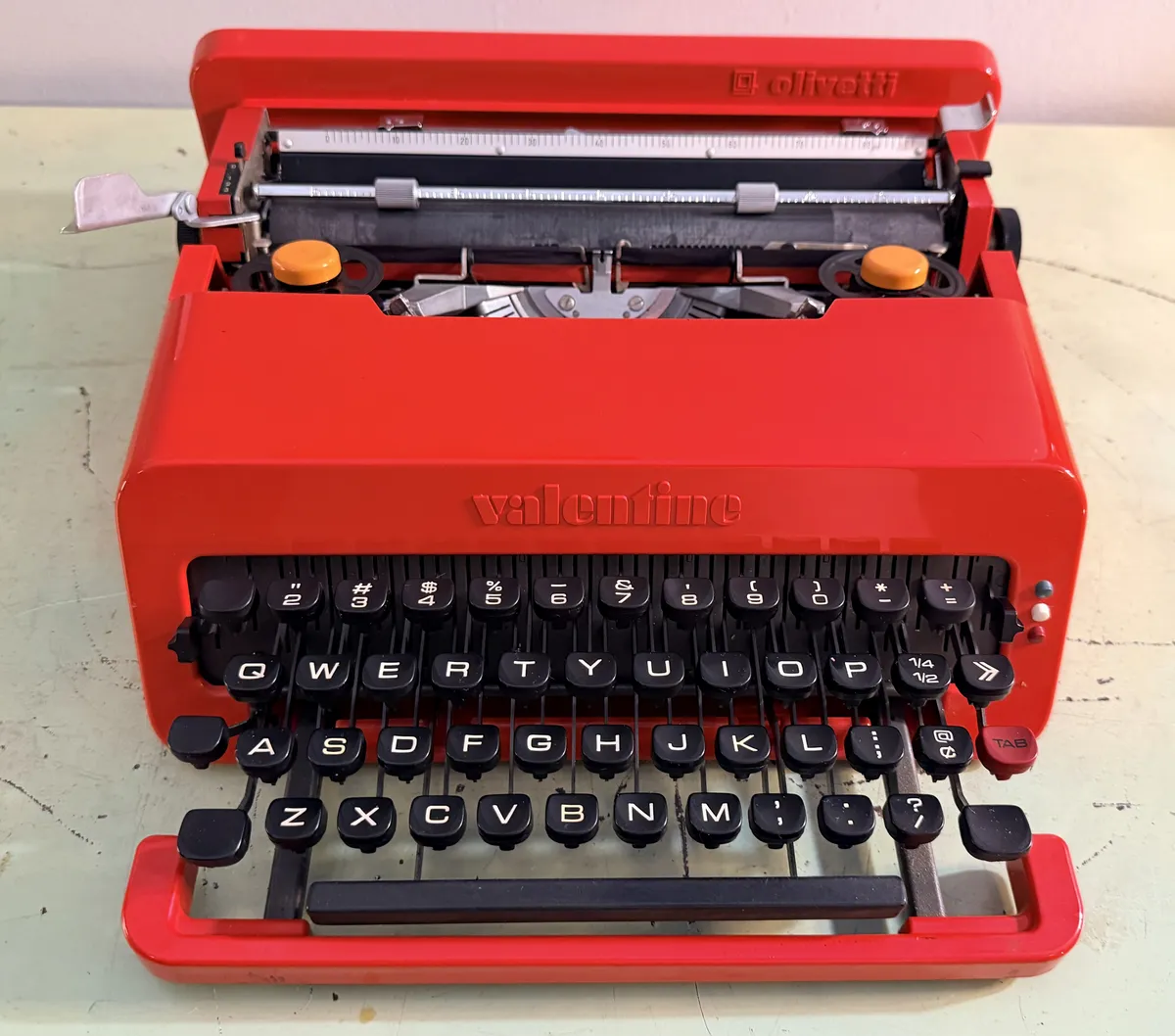
So yeah, the terms are fuzzy. But there’s another reason I call myself the Typewriter Mechanic rather than the Typewriter Restorer, and it’s probably the more important one. I don’t actually want to erase everything that has happened to a typewriter.
A typewriter has already had a life
When I get a sixty- or seventy-year-old typewriter onto my bench, I’m not starting with a blank slate. I’m dealing with a machine that has spent decades becoming the particular self of a machine sitting in front of me.
So springs have stretched. Linkages have worn against one another, filing away grooves. Lubricants have dried, leaving behind residual traces. Dirt and oil have mixed together and turned over decades into varnish. Somebody has adjusted something at some point, and somebody else likely adjusted the adjustment. Screws have settled, cemented into place. Rubber has hardened into gloss or decayed into powder. The whole mechanical system has spent years accommodating itself to its own wear.
You see, typewriters have personalities. They have behaviors. They have attitudes all their own, and a lot of those are cumulative. They’re acquired over years of honest work.
Some of that needs to be corrected. Some of it doesn’t. And some of those habits learned over time by necessity can actually be erased by overzealous cleaning or restoration.
That’s an important distinction, because the things we do inside a typewriter can’t always be undone.
There are metal pieces inside these machines designed with the tolerance to be bent for an adjustment. They can be bent back. And maybe you can do that a number of times. But eventually there’s one last time… and you snap the piece. Something that was slightly out of adjustment is now actually broken.
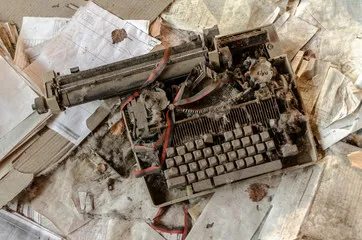
I’m not saying it’s unfixable. A typewriter is a wonderfully recuperative machine in the right hands; it’s two thousand tiny parts, springs and screws and linkages, and most things are fixable. But it can become very difficult to fix a typewriter once you’ve done that kind of damage to it.
You’ve taken the thing you were trying to fix and given yourself a much bigger thing to fix. Now you’ve gotta find loose parts for sale, or you have to buy a whole donor machine, just to get your typer back in working order.
So my first rule when I’m working on a typewriter is basically the same rule I try to follow when walking into a national park: disturb as little as possible.
A mechanic is not a detailer
Think of any good mechanic you know. Dirty, probably. Brilliant spatial awareness a lot of the time. Certainly loads more intelligence than mechanics are usually given credit for. A good mechanic can hear a noise you barely noticed and start narrowing down where it’s coming from, isolating and diagnosing the issue with ease. They understand how one moving piece affects another moving piece three assemblies away.
But you probably don’t take your car to your mechanic because there’s dust underneath the passenger seat.
That’s a different job.
I’m the Typewriter Mechanic. I’m not the Typewriter Museum Curator.
That doesn’t mean I think restoration is bad. Some people want spotless typewriters. That’s okay. There’s a market for that, and there are people doing extraordinarily thorough restorations, taking machines apart and cleaning and adjusting and polishing them to a really astonishing standard. They produce beautiful machines, and I’m not knocking them.
There’s also a reason those typewriters cost many times more than what an average person is able or willing to spend on a typewriter. That kind of restoration involves an enormous amount of skilled labor, and it should cost accordingly.
I’m after something different. I’d rather provide a more accessible experience at a scale where I can supply a lot of people with trustworthy, usable typewriters for decent prices. I’m fixing these things with an eye toward functionality.
Which means there are certain things I won’t pay attention to. There are certain things I’ll miss, frankly, because my eye is trained to see something different.
I genuinely don’t chase every smudge.
There was hair inside the typewriter
I once sold a Remington to a very, very kind young woman who was very, very disappointed when she received it. She opened the machine up and saw dust and grime inside. At one point she said something to me that has stuck with me ever since…
“Brandon, there was hair inside this typewriter.”
And my first thought was, probably not?
It was likelier a fiber from one of the plumber’s acid brushes I use to clean typewriters. Because the funny thing was, I actually had cleaned it.
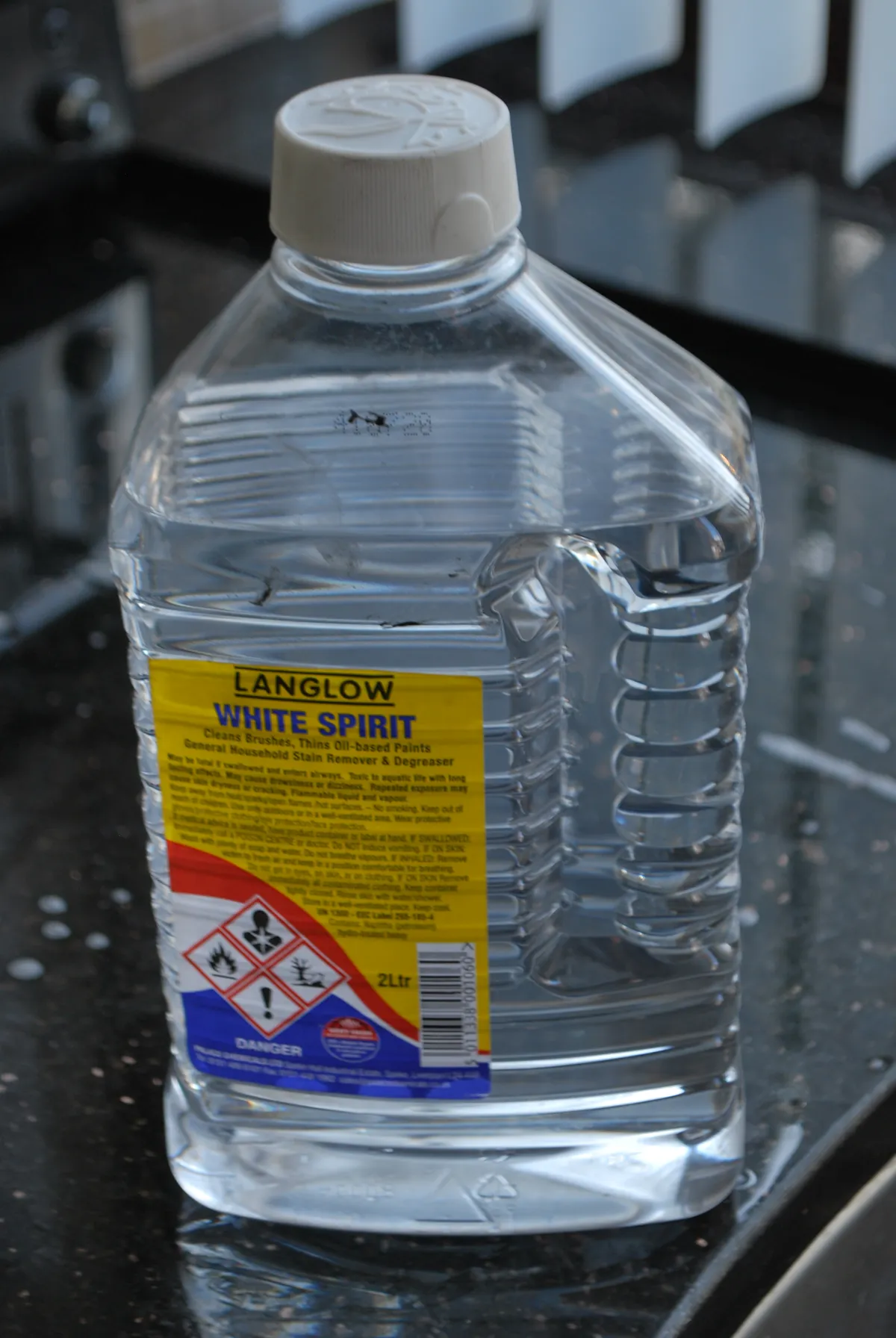
I typically use mineral spirits. I had cleared out quite a lot of the dirt and grime already, addressed what needed to be addressed, and the typewriter was working very well when it left my bench. But (and place this into the "coulda been a hair" column) I hadn’t gone looking for every last bit of dust and dirt and aging inside the machine.
I frankly didn’t see the need to.
Suppose a spring has spent decades stretched across a bit of old oil and grime that has hardened into varnish. Over time, that spring and that linkage have gotten used to one another exactly as they are. Remove all of that varnish and the relationship totally changes. The spring that had enough tension before may slacken and lose elasticity once that material is gone.
Riddle me this. Which was the better restoration… to leave the varnish or to remove it?
Now, I suppose you could say, well then, change out the spring. Swap the linkage. Which is fine as advice goes. But those are all downstream, aren’t they? Then you adjust whatever the new spring changes. Then you correct whatever that adjustment changes. And at some point I think you have to ask what problem you were trying to solve in the first place.
If the problem was that the typewriter had some dirt inside it, but the typewriter worked, then what exactly have we accomplished?
So this is the line for me. Grime becomes my problem when it interferes with, or threatens to interfere with, the normal operation of the typewriter. That’s when it’s time to get involved.
Before you fix something, make sure it’s broken
There can be an awful lot that feels like it’s gone wrong on a typewriter that hasn’t gone wrong.
A typewriter that isn’t printing characters might simply have the ribbon selector moved to the stencil option. If the carriage doesn’t move, it could be that the carriage lock is engaged. If the margins aren’t working, maybe there’s a motion on a lever that you have to make that you didn’t realize you had to make. Certain aspects of the typewriter may just always be a mystery to you.
Which is why doing a little research and learning about the capabilities of the machine you own is so important.

These machines were built in different countries, by different manufacturers, across the better part of a century. They’re not standardized in the way we’ve become accustomed to modern things being standardized. Sometimes the thing that looks broken is just something you haven’t learned yet.
So find the manual if you can. Learn what the controls do. Move things gently. Watch what happens underneath when you press a key or move a lever. Try to understand the mechanism before you decide the mechanism needs to be changed.
At the end of the day, I think a typewriter works best when it’s disturbed only to the point of taking care of an issue. That’s restraint, and restraint matters when one unnecessary adjustment can become an irreversible one.
Major in the majors
The same thing applies when you’re choosing a typewriter to buy.
Yes, aesthetics are important. Of course they are. I like a beautiful typewriter as much as anybody else does. Color matters immensely to me. Condition matters, too. Maybe there’s a scratch you can’t stand looking at, and that’s reason enough not to buy that particular machine. Fair enough.
But please be sure to major in the majors.
Instead of asking whether the typewriter is spotless, whether it has any dings, whether somebody opened it up and polished every piece, I’d much rather people ask whether all of the typebars strike. Do all the type slugs hit? Does the carriage advance when you type? Does the paper feed correctly through the platen and rollers? Do the margins work? Does the backspace work? If it has a tabulator, does that work? Does the ribbon vibrator go up when a key is pressed and come back down again?
And what does the alignment look like?
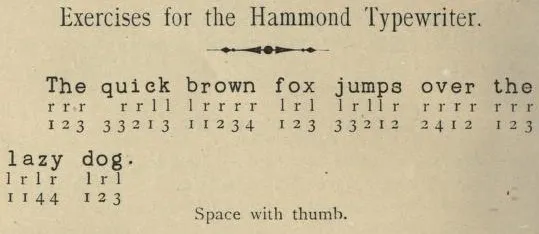
That one is partly up to you. A seventy-year-old typewriter doesn’t necessarily need to produce computer-printer-perfect text. Some people like a little variation. I do. The question is whether the alignment is where you want to see it.
These are the things that determine whether you’re going to enjoy owning a typewriter. And yet a lot of the time people focus on the very wrong thing.
The evidence that something happened
There’s another reason I don’t want to wipe everything away, which is simply that old machines should be allowed to be old.
The scratch next to the carriage return lever came from somewhere. So did the worn spot on the spacebar. So did the discoloration where somebody’s hands rested thousands and thousands of times. I don’t know who made those marks, and usually I never will.
But somebody sat in front of this machine before I did. Somebody typed letters on it. Or invoices. School papers. Sermons. Grocery lists. Love letters. Terrible unfinished novels. Maybe absolutely nothing interesting whatsoever. (That’s part of it.)

I don’t think every trace of those people needs to disappear before the next person is allowed to use the machine.
That’s preservation too.
And this is where my philosophy of fixing typewriters and my philosophy of selling them are really the same thing. I don’t want these machines embalmed. I want them typing. I want somebody to put a piece of paper into one of them and make the next mark.
So when a typewriter is on my bench, I’m asking, what actually needs cleaning? What needs adjustment? What’s preventing this machine from doing what it was built to do? What looks like it’s going to become a problem soon? And then there’s the other question, which may be just as important… what do I leave alone?
That’s not an excuse for sloppy work. Anybody with enough confidence and a screwdriver can keep going. The harder thing is knowing when to stop. It’s knowing that the discoloration on a linkage isn’t the problem. It’s knowing that a little grime behind a spring isn’t hurting anything. It’s knowing that one more bend, one more adjustment, one more attempt to make an old machine behave like a new one might leave you with something worse than what you started with.
That’s the judgment I’m trying to develop every time I put a typewriter on the bench, and it’s the judgment I wish more people brought with them when they buy one.
Major in the majors. Ask whether the typebars move. Ask whether the carriage advances. Ask whether the paper feeds. Ask whether the margins, backspace, ribbon lift and tabulator do what they’re supposed to do. Ask what the machine feels like under your hands.
Then you look at the scratch.
Maybe you still hate it. Fine! Buy a different typewriter; there are plenty out there. But don’t confuse evidence that a machine has lived with evidence that a machine has failed.
A seventy-year-old typewriter doesn’t need to be returned to the moment before anybody touched it in order to be worth owning. I’m not sure that’s what I would want from one anyway.
My job, and my instinct, isn’t to erase the last seventy years. It’s to make sure the next sentence can be written.